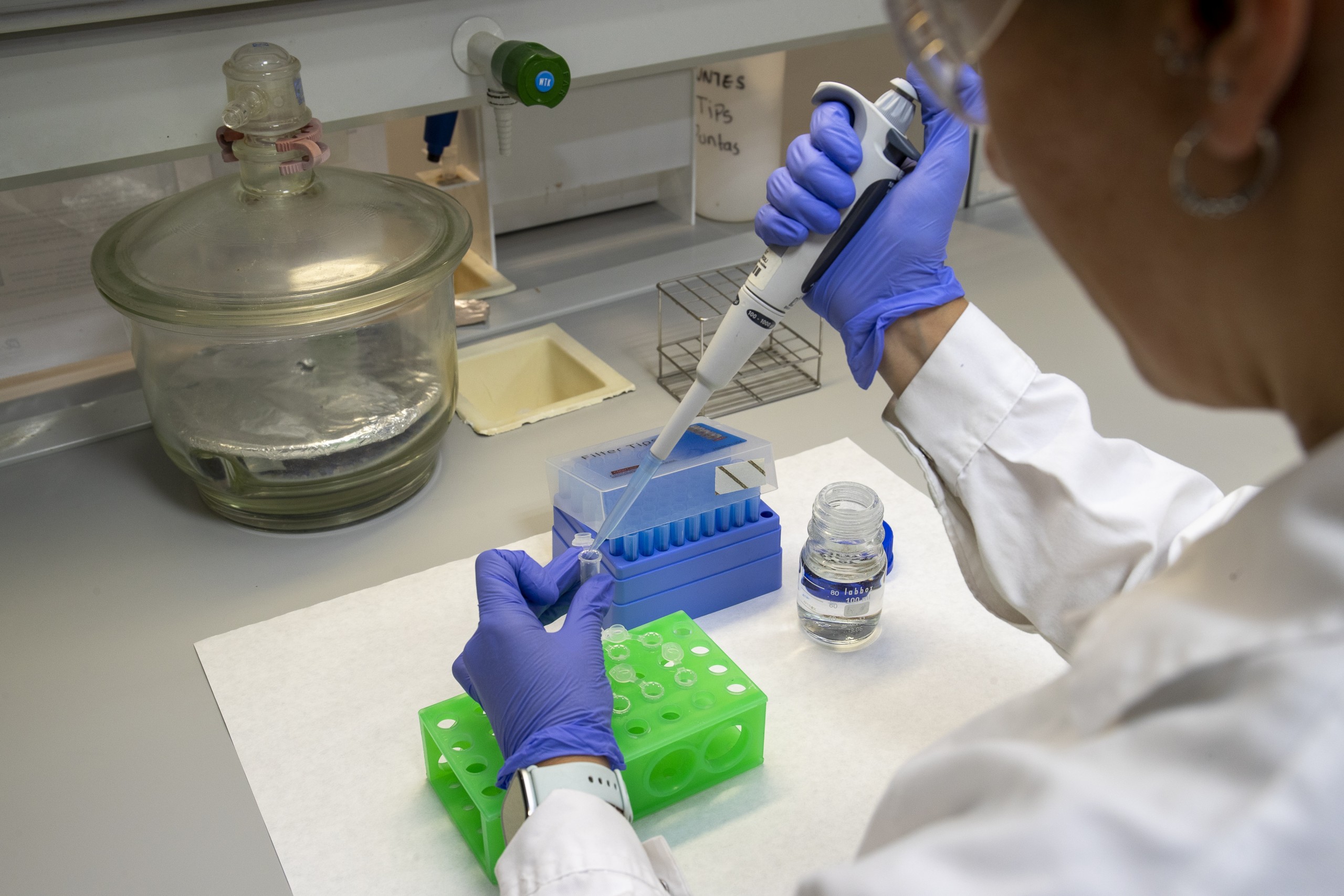
For years the URV has led the way in the analysis of the problems generated by tourist activity, especially overcrowding and its repercussions on social cohesion, housing and mobility, and it makes proposals for a sustainable model that is compatible with the needs of the local population and the territory
Almost 20 million international tourists visited Catalonia in 2024. This is a record and the figure is unlikely to stop rising in the short term, with more and more people from emerging countries gaining the ability to travel. Such a large number of visitors puts an even greater strain on a territory that is already dynamic and complex in itself and where, especially in cities such as Barcelona and Tarragona, tourists share spaces and services with residents. The phenomenon is leading to social debate regarding the increase in housing prices in the most touristy areas, the overcrowding of people in certain public spaces and the strains being placed on transport infrastructure.
Although the subject has moved further up the agenda in recent years, the Unviersitat Rovira i Virgili has been focusing for some time now on analysing the behaviour of tourism and its relationship with the society and the territory in which it is located. In particular, much research has been conducted by the URV’s Territorial Analysis and Tourism Studies Research Group (GRATET), which has been in operation for 30 years.
Aaron Gutiérrez, researcher at the GRATET and Director of the URV’s Department of Geography, explains that unlike the vast majority of academic research in tourism, which is very narrow in its focus on supply and demand, market logic, etc., the URV tales a much broader view of the subject insofar as it also analyses the social and economic context of tourism and all the sectors involved. This is based on the belief that tourism “is one of the activities that has the greatest capacity to transform the territory and society, and that it has both positive and negative impacts”. “This transversal view of tourism and how it affects other dynamics is what we look at. What role does mobility play, what role does it play in the supply of housing, and how can government and local planning help bring about a more sustainable tourism model”, says Gutiérrez.
In many tourist areas, as in Catalonia, the increase in the number of visitors and their concentration in the most popular areas leads to overcrowding that threatens the balance between tourism and the activities carried out by local residents on a daily basis. “Tourism is one of the main economic engines of societies like ours, but it is also one of the great generators of negative environmental, social and economic externalities.”, admitted Aaron Gutiérrez, who warns that in order to face the challenges that arise from tourism, tourism planning needs to be integrated into the overall planning for the territory, which also includes mobility, housing and so on” in order to maximise the social and economic benefits and mitigate any negative impacts.
Therefore, according to Aaron Gutiérrez, “integrated responses are needed that think about tourism in relation to the other human activities that take place in the territory. We need to understand tourist destinations as complex territories”. This is the case of the Costa Daurada, where tourism rubs shoulders with industry, agriculture, fishing, services, etc. and where, therefore, joint regulation and planning are needed.
The danger of social exclusion
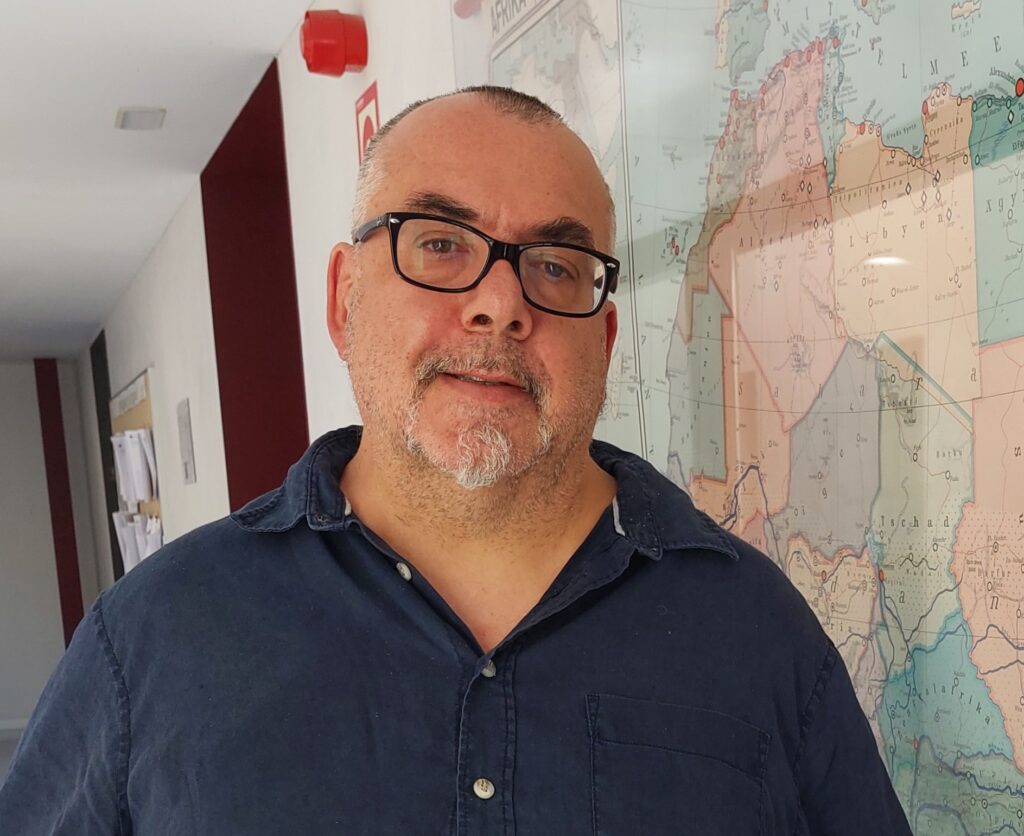
Antonio Paolo Russo warns that tourism in cities exacerbates inequalities, increases polarisation and exclusion from gentrified residential areas, leads to inefficient mobility and, in short, harms social cohesion and integration.
Influencing the various levels of government and the key stakeholders in the territory is one of the main objectives of the research projects carried out at the URV. One of the most ambitious is SMARTDEST, headed by Antonio Paolo Russo, which in recent years has sought to determine to what extent tourism and its growth affect social cohesion in various European cities, including Barcelona. “When we speak of social exclusion, we speak of residential displacement, of workers and citizens who have to move further away due to increased property prices; of the marginalisation of the resident population; of difficulties in finding work; difficulties in carrying out daily activities, especially for older people, and of problems related to the overcrowding of spaces”, explains Russo.
In fact, the study, which was promoted and coordinated by the URV and involved researchers from various European universities, concluded that the tourist transformation of cities increases the risks of social exclusion. The project detected that tourism exacerbates inequalities, increases polarisation and exclusion from gentrified residential areas, leads to inefficient mobility and, in short, harms social cohesion and integration.
The projects carried out by the URV always involve the participation of local stakeholders and neighbourhood communities, and seek to influence all levels of government
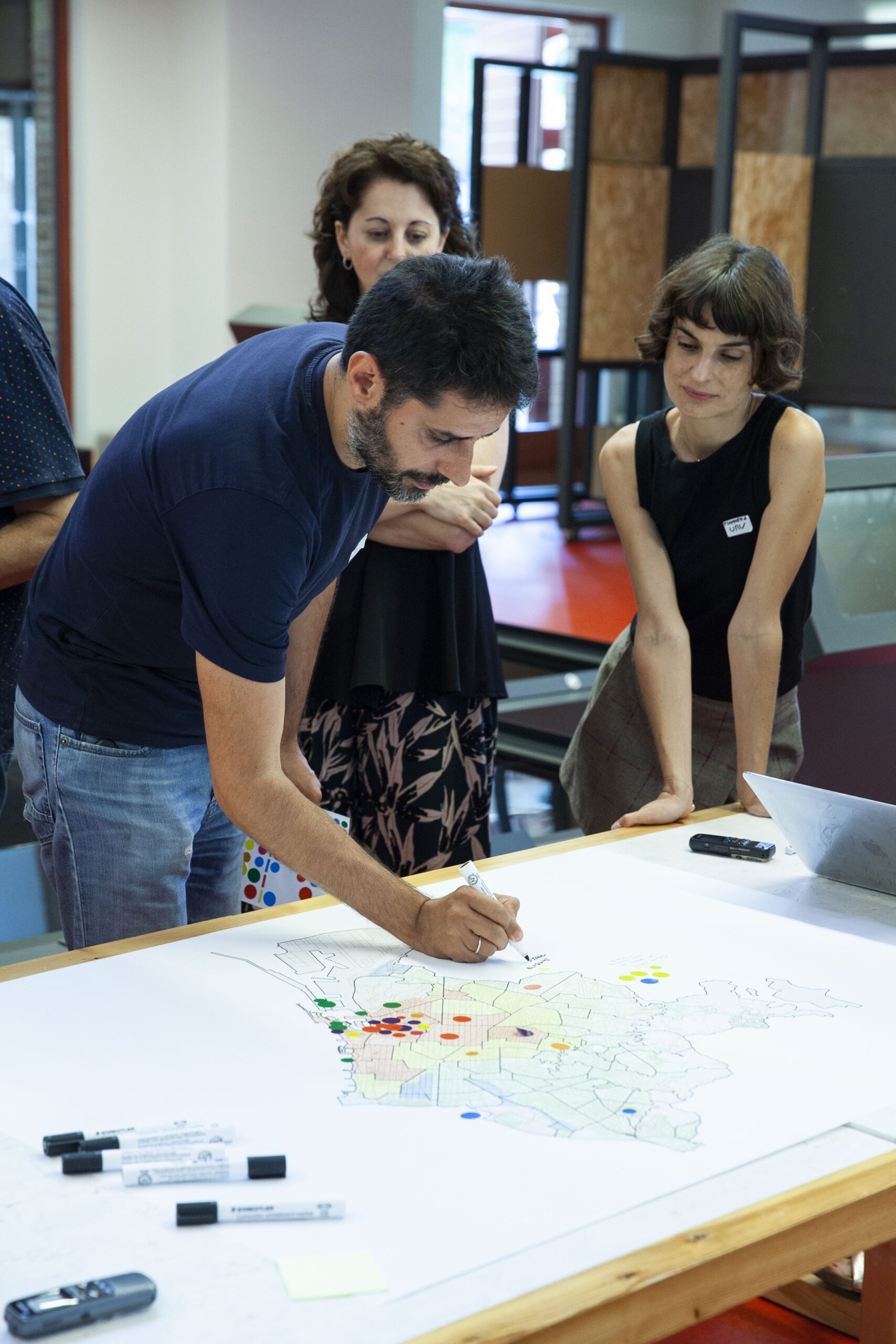
According to Russo, one of the benefits of the study, which is based on surveys and indicators, is the fact that local communities are involved in developing ideas and conclusions as a result of it. In fact, the final stage of each case study was a citylab, a participatory process that enabled local stakeholders to evaluate the results of the researchers’ analysis and participate “in the design of policy instruments and measures that could reverse these forms of exclusion”. These URV projects always involve the participation of local residents and are coordinated with local government, in this case Barcelona City Council.
One of the key features of the SMARTDEST project is a map showing the risk of residential displacement in the Catalan capital. As Russo explains, an algorithm has been created to assess the risk that residents have of losing their home, given the state of the housing market and the average family income. “Barcelona City Council has integrated the map into its database and, in theory, uses it to help design its policies,” says Russo. However, he admits, it is not easy for administrations to pay real attention to all the information that they receive, given the regular changes to who is in government and the consequent short-term thinking that this fosters. Consequently, what is needed instead is a broad, open, non-ideological and long-term approach.
Housing is, therefore, one of the sectors on which mass tourism has a major impact. At the URV, the UNESCO Chair in Housing leads research, teaching and knowledge transfer in this area. Its director, Héctor Simón, explains that their analyses are always based on studies and empirical data and that they try to be as objective as possible because one of their aims is to “seek a balance between divergent positions”, to act as a bridge, a generator of dialogue, between the often opposing interests that exist around housing.
According to Héctor Simón, the data show that housing for tourist use (HTU) represents only 2% of the total amount of housing in the country; as such, he believes that its real impact on the private market is yet to be demonstrated. However, in certain tourist areas, if an excess of tourist accommodation is detected, then ‘surgical’ measures rather than a ‘broad brush’ approach can be taken: ‘Zoning can be implemented if there is scientific evidence of a concentration of short-term rentals in an area’. For example, both Catalan and Spanish law give landowners’ communities the power to regulate or even prohibit such activities. And if they are not a problem, then it is simply a matter of controlling them with the existing regulations”.
Nevertheless, Héctor Simón believes that preventing accommodation from being used by tourists does not mean that it will find its way onto the private rental market. “It is naïve to think that by banning HTUs, 80% of which are second homes, they will become available to renters on private rental market. According to the director of the URV’s UNESCO Chair in Housing, “the HTUs are not the cause, but the consequence of erroneous policies that have made access to property ownership impossible and have caused legal insecurity for owners who want to put their flat or house on the private rental market”.
Simón criticises the law adopted in 2023 by the Catalan government whereby licences are suspended for five years while local administrations modify planning and grant licences based on available housing. “What we need are policies that move this tourist housing towards the private residential market, to make it attractive, through tax incentives for example, and for owners to feel protected by the law and that they will be able to collect their rents”, he concluded. Like his counterpart Russo, Héctor Simón also regrets that there is “more ideology than logical thinking” in government.

Aaron Gutiérrez, for his part, has carried out studies as a researcher for the GRATET, especially on mobility. He also highlights the lack of planning by governments regarding the important issue of climate change, given the high use of public and private transport by tourists. “Tourism is not integrated into the urban and territorial planning of Catalonia, and it should be, given how touristy Catalonia is. It is not taken into account that for three or four months of the year the number of travellers massively increases”, he laments. Antonio Paolo Russo also pointed out that the policies of the European Commission take very little account of the problems of social exclusion generated by tourism.
Despite this, in order to continue influencing governments and society, the GRATET has recently launched two projects focused on mobility and sustainability. ADAPTOUR analyses, from a broad perspective, the adaptability of tourist destinations in a context of the climate emergency and social and economic crisis. “One of the research lines is mobility, we analyse the patterns of tourists. Their mobility has a greater impact than that of the locals, so it is very important,” Gutiérrez said. From this point on, government, especially local government, should manage mobility by taking into account the considerable increase in the numbers of travellers at certain times of the year: “It is necessary to set limits, to plan and to regulate”.
When mobility is multiplied
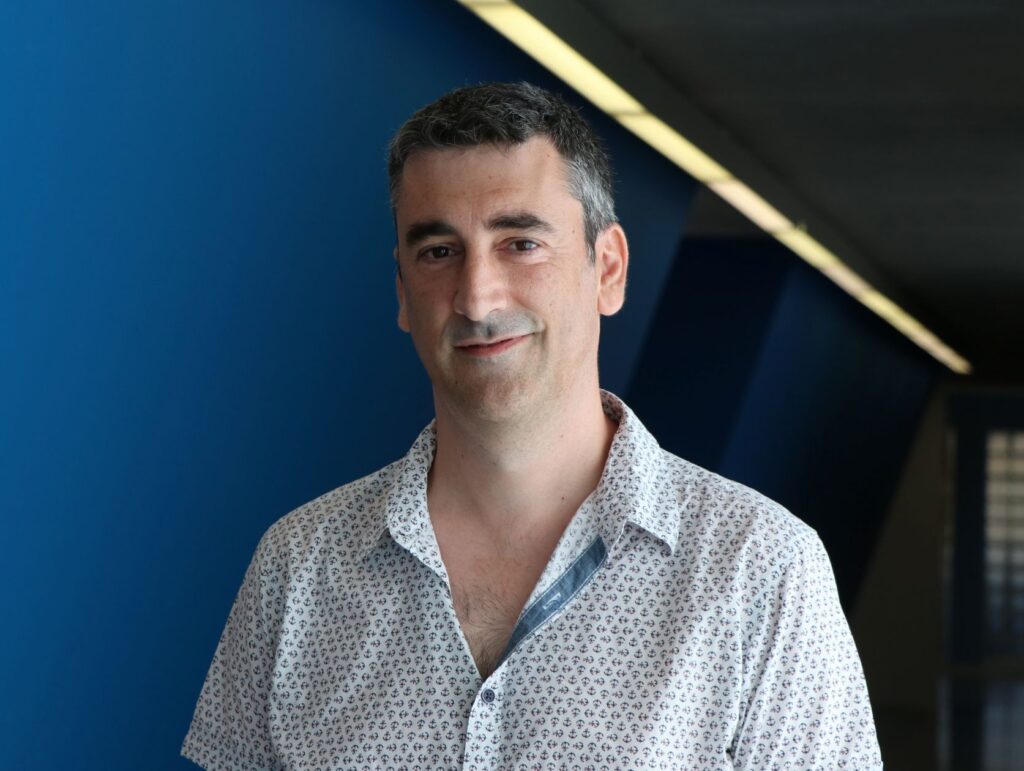
The researcher Aarón Gutiérrez considers that “Catalonia urgently needs a tourism mobility plan, given the role that tourism plays and that it is inseparable from all the others activities carried out in the territory”.
For example, people on cruise holidays were analysed in the study. Visits by this group of people are very short but they still want to see a lot of things. Therefore, their impact and visibility is high as they flock to tourist hotspotswhich for a while become totally overcrowded. It is therefore important to take into account how they move, according to Aaron Gutiérrez.
VISITMOB, for its part, is a project focused exclusively on analysing the mobility of tourists in Barcelona and their impact on the mobility of residents. Co-financed by Barcelona City Council and the Fundació la Caixa, the project’s novel approach also took into account the mobility of day visitors, whether they are foreigners staying in coastal towns or Catalans spending the day in the capital. “These two groups have been studied very little”, Gutiérrez recalls.
Almost 4,000 surveys of these different types of visitor were carried out to identify the movement patterns of this large floating population and to analyse how they influence the quality of life and mobility of residents: “We detected overcrowding in certain public spaces and congestion of services, especially public transport. As was to be expected, we detected negative perceptions of tourism in the most visited neighbourhoods and, as is usually the case, we found that the most disadvantaged citizens are those most affected by mobility problems”.
Once again, the researchers were clear about what needs to be done: mobility strategies need to be agreed with all stakeholders so that tourist mobility can be fully integrated with that of locals. According to Aaron Gutiérrez, “Catalonia needs a tourism mobility plan as a matter of urgency, given the importance that tourism plays and that it is inseparable from all other activities in the territory”.
Towards sustainability
In this regard, Russo is also clear that tourism policy must be closely linked to social policy, housing and mobility. Everything should be considered together in order to plan a resilient city that is inclusive for its citizens. “If we only think of tourism as a factor for economic growth, all these links are lost”, says Russo, who believes that reducing tourism is an option that needs to be considered: “We don’t necessarily have to grow. It is possible to innovate, improve productivity, competitiveness, be more environmentally and socially sustainable. There must be more specialisation and quality in tourist jobs, which are too precarious; the local population must benefit from tourism through, for example, the provision of better spaces and more services; there must be more complementarity with culture and education”.
In fact, these ideas have been taking form at the URV for some time now. For example, two researchers from the GRATET group, Marta Nel·lo and Alba Font, have launched initiatives to promote wellness tourism and natural areas and coastal paths as features of sustainable tourism, and both are working on project to create a model for accessible and inclusive tourism in the Costa Daurada area, which aims to develop a sustainable tourism model for the local sea-based economy (tourism, fishing, etc.). The project is being promoted by (International Centre for Lifelong Learning in Tourism), a training and research centre recently created by the URV Foundation, which responds to the needs of a constantly changing tourism sector and aims to provide professionals in the sector with the tools to make tourism a more sustainable, inclusive and quality activity. “The sector is evolving and has to adapt to a series of changes in terms of the law, sustainability, climate change, social responsibility and so on”, explained Marta Nel-lo, who is the director. She also directs the Salou-Costa Daurada Chair of Tourism Innovation and Research, where she works to consolidate the destination as a leader in innovative, sustainable, accessible, intelligent tourism in cooperation with all local stakeholders. All in all, the initiatives aim to make tourism a less invasive activity that has a lower impact and, above all, that is in balance with the territory and the people who live there.