14/01/2026
The INU from the inside: enriching experiences that drive internationalisation at URV
The URV is an active member of the International Network of Universities, a global alliance that opens the door to high-impact academic and training opportunities for the entire university community, such as those experienced by student Ariadna Vives and professor Ferran Mañé
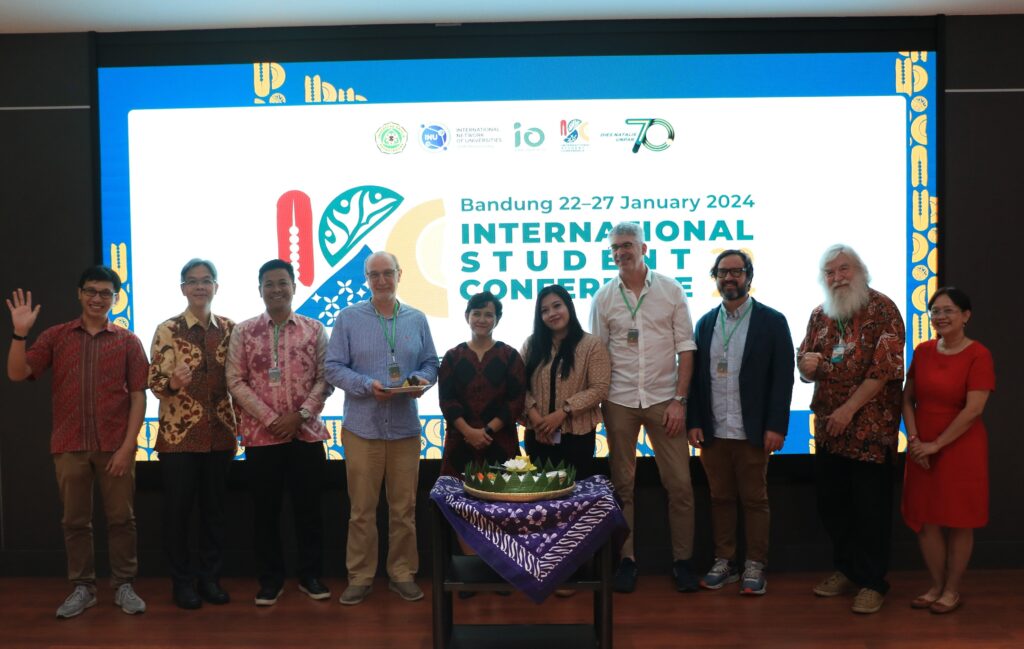
The URV is an active member of the International Network of Universities, a global alliance that opens the door to high-impact academic and training opportunities for the entire university community, such as those experienced by student Ariadna Vives and professor Ferran Mañé
The URV university community is able to participate in international mobility thanks to the International Network of Universities (INU), a global alliance in which the URV plays an active role and which opens the door to high-impact academic and training opportunities. Students and staff (both academic and non-academic) can access experiences that foster critical thinking, sustainability and global citizenship through programmes such as the International Student Seminar for Global Citizenship and Peace in Hiroshima (Japan), the International Student Conference (Indonesia), the Seed Money Fund, the Collaborative Online International Learning and the Researcher Mobility Program, some of which are co-organised with partner universities in the network. The network is made up of the following universities: European University Viadrina (Germany), Hiroshima University (Japan), James Madison University (USA), Kingston University London (United Kingdom), Malmö University (Sweden), Osnabrück University (Germany), Stellenbosch University (South Africa), Taras Shevchenko National University of Kyiv (Ukraine), Universidad Nacional del Litoral (Argentina), Universitas Katolik Parahyangan (Indonesia) and the Universitat Rovira i Virgili (Spain).
To cover part of the cost of participating in the networks’ activities, the URV offers the I-Networks and KA171 grants (the latter only if there is a project with the host university).
For the university community, being part of the INU means accessing unique opportunities to grow professionally and personally, experiencing intercultural encounters and contributing to the Sustainable Development Goals from a global perspective.
The experiences of Ariadna Vives and Ferran Mañé, participants from URV in various INU activities, demonstrate the transformative potential of this network and its ability to bolster professional careers, research projects and lasting international links.
Ariadna Vives: “The experience has provided me with valuable tools to tackle global challenges from a critical and committed perspective“
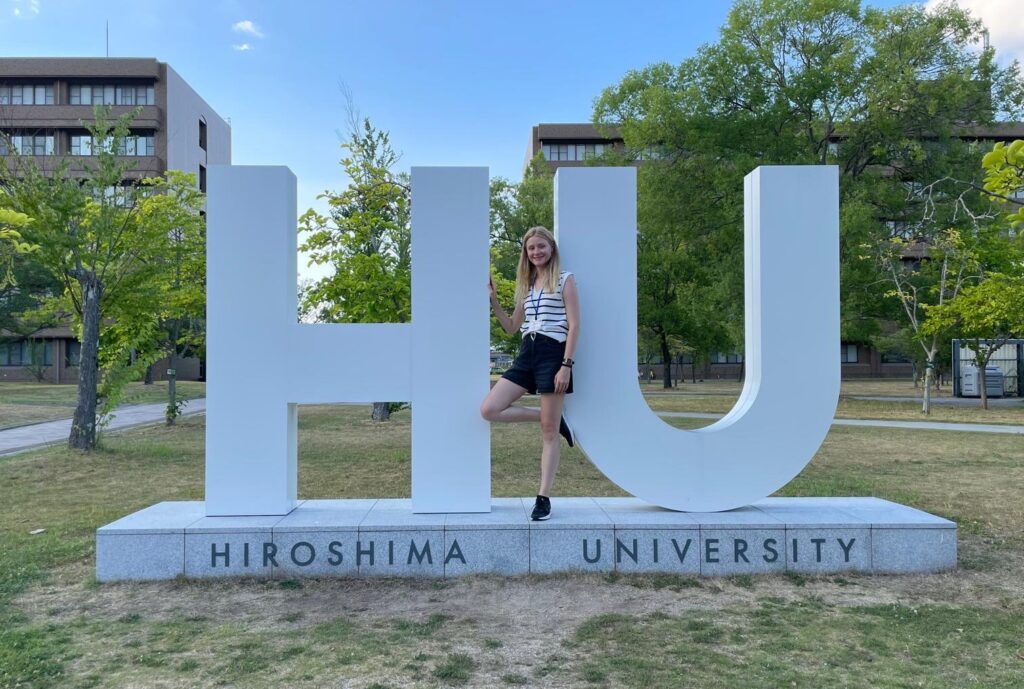
How did you find out about the opportunity to participate in the INU’s activities?
I discovered the INU’s activities through the University’s social media. They immediately caught my attention, as they were closely aligned with my interests in international cooperation, sustainability and peace. It seemed like a very enriching opportunity and I didn’t hesitate to sign up.
Could you briefly explain what the Hiroshima Seminar and the UNPAR International Student Conference are?
The Hiroshima Seminar is an international student gathering that fosters reflection and dialogue regarding global challenges. The programme features academic lectures, institutional visits and activities involving atomic bomb survivors. This year, for example, coinciding with the 80th anniversary of the bombing of Hiroshima, the seminar centred on peace, historical memory and nuclear disarmament. One of the most dynamic and interesting parts was the simulation of a UN session, where we represented different countries and debated issues related to global security and disarmament.
As for the UNPAR International Student Conference, held in Indonesia, it is a space for intercultural dialogue where students from various countries debate global issues such as sustainable development, social justice and international cooperation. For example, next year the central theme will be the challenges posed by artificial intelligence.
What was your best experience during the Hiroshima seminar?
Without a doubt, one of the best experiences was the cultural exchange: being able to connect with students from all over the world, share perspectives and debate important topics in such an enriching environment. Particularly memorable was the simulation of a UN session, where we represented different countries and discussed global security and disarmament. It was a very dynamic activity that made us feel part of a genuine international dialogue.
I would also highlight being able to witness first-hand the 80th anniversary ceremony of the bombing of Hiroshima. It was a very moving and profound moment, connecting us with the historical memory and the collective commitment to peace.
What have you learnt, both academically and personally, from this international stay?
Academically, I have been able to go much deeper into topics such as peace, nuclear disarmament and international diplomacy, especially through the lectures and the UN simulation, which helped me to better understand how negotiations between countries work. Personally, I have improved my communication skills and learnt to work in multicultural teams, and it has helped me to open my mind, to strengthen my commitment to peacebuilding and to appreciate even more the importance of historical memory.
How has this experience helped you to better understand the importance of global thinking and sustainability?
It has made me realise that the world’s major problems, such as climate change or peace, cannot be solved from a single place or with a single perspective. You have to listen to different viewpoints and work together. I have understood that sustainability is not just a matter for each country, but a shared responsibility. Thinking globally is key to finding real solutions.
What challenges did you encounter while participating in an international setting, and how did you overcome them?
The main challenge was intercultural communication. We were participants from countries with very different cultures sharing ideas and experiences, and this can sometimes lead to misunderstandings or difficulties in fully understanding each other. But with respect, patience and a willingness to learn from others, these obstacles are transformed into opportunities. In the end, what may seem complicated at first ends up creating very special and enriching bonds.
Would you recommend this experience to other students at URV?
Yes, absolutely. It’s a unique opportunity to grow personally and professionally, to meet people from all over the world and to gain a global perspective that perfectly complements university studies.
Do you think that participating in the INU will have a positive influence your professional or personal future?
Yes, I believe it will have a very positive impact. This experience has helped me to better define my professional interests in the field of international cooperation and sustainability, and has provided me with valuable tools to tackle global challenges from a critical and committed perspective. Furthermore, it has also allowed me to develop key professional skills, such as critical thinking, teamwork and intercultural management, which I consider essential for international and diverse environments.
Ferran Mañé: “interacting with students from all over the world has allowed me to come into contact with diverse and enriching perspectives“
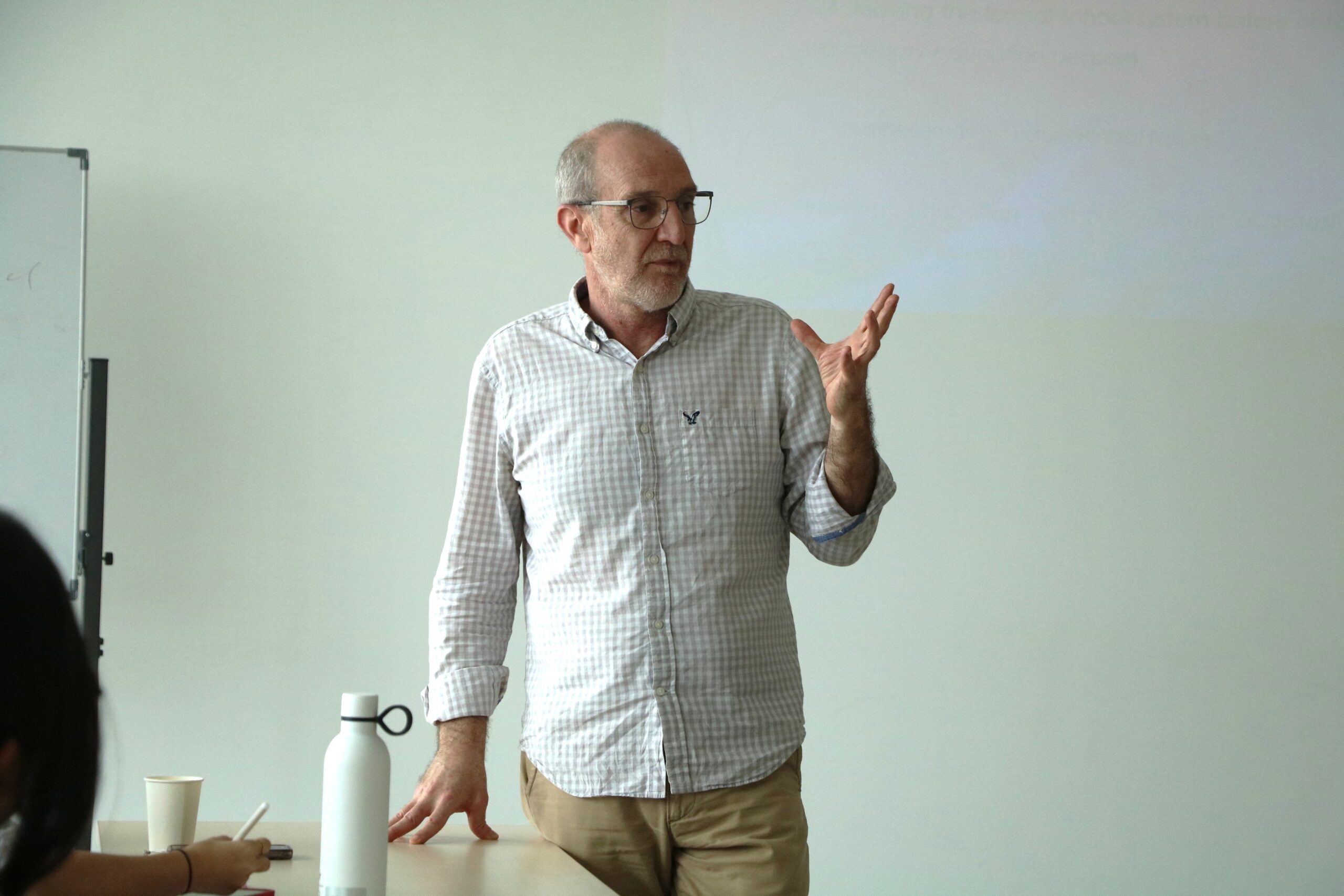
How did your relationship with the INU network begin and what projects or activities have you been involved with?
My involvement began in 2019, when I first took part in the Hiroshima seminar. I also took part in 2020, 2021 and 2022. Later, I participated in the Bandung seminar in 2023 and 2024. Following these experiences, I contacted several professors from the network to submit a proposal to the Seed Money programme.
You have participated in the UNPAR Conference and the Hiroshima seminar. Which experience would you highlight?
Both experiences have been very positive. On the one hand, interacting with students from all over the world has allowed me to come into contact with diverse and enriching perspectives. On the other, I have had an excellent opportunity to establish contacts with international academics. The programme facilitates the exchange of ideas and allows one to observe the different approaches that students and academics take, depending on their backgrounds.
Has the Seed Money Fund enabled you to start any interesting projects or collaborations?
Yes. We have launched a project that studied the influence of sociocultural norms on women’s behaviour in the workplace. The funding has been key to consolidating international collaboration in a shared line of research.
How does your participation in the INU benefit your Erasmus+ KA171 project application?
Participation in the INU reinforces and complements the project application, as it allows us to expand the available funding.
What benefits do you think the INU brings to the academic and international development of URV?
It offers a highly valuable platform for establishing contacts with universities around the world in a highly collaborative environment. Not only does it facilitate personal exchange, but it also generates opportunities to drive joint research projects and expand the University’s international reputation.
What have you personally and professionally gained from participating in these activities?
It has provided me with significant academic learning and, above all, very significant cultural enrichment. Furthermore, the opportunity to network with professionals and researchers from other countries has been essential for my professional development.
What advice would you give to the teaching and research community at the URV who want to get involved in international projects like these?
I would encourage them to take advantage of these opportunities, especially if the international comparison can add value to their research lines. Participating allows you to open up new perspectives and establish collaborations that would be unlikely to arise in a strictly local context.
Has any cultural or academic aspect surprised you during your experience with other universities in the network?
I have studied and worked abroad, so rather than a “surprise”, it has been a reaffirmation of how enriching it is to meet and share experiences with people from other cultural and social backgrounds, a process that always brings new perspectives and consolidates mutual learning.
