02/03/2026
A new technique can monitor the state of batteries connected to the grid without causing interference
Researchers at the Universitat Rovira i Virgili are helping to develop an innovative method that identifies in real time the charge and health status of energy storage batteries without disturbing the grid
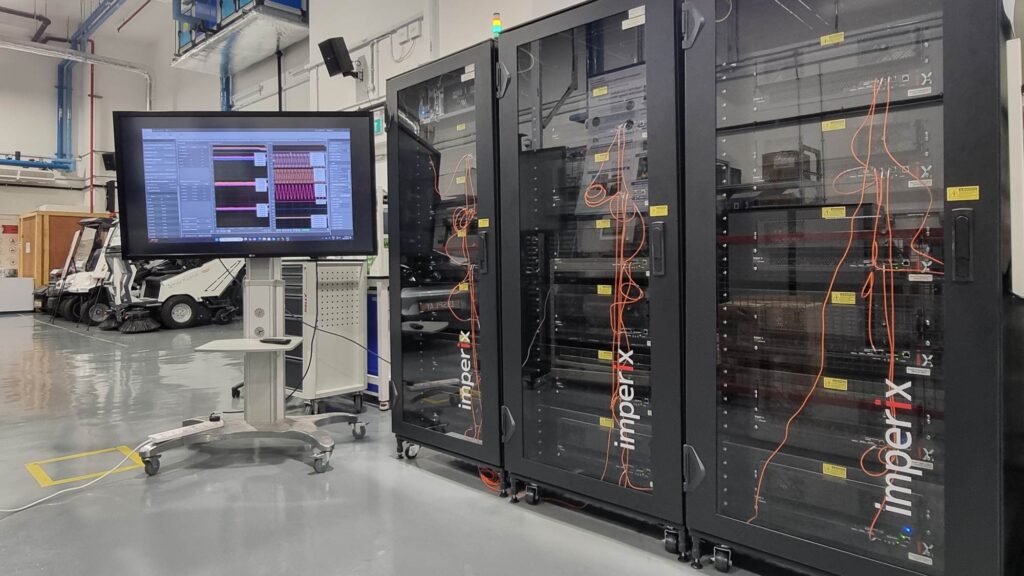
Researchers at the Universitat Rovira i Virgili are helping to develop an innovative method that identifies in real time the charge and health status of energy storage batteries without disturbing the grid
Battery energy storage systems have become an indispensable part of the energy transition. While it is true that they present challenges in terms of their manufacture and disposal when they reach the end of their useful lives, they are still by far the best option available to us and offer many technical advantages: they facilitate the integration of renewable energies, can stabilise the grid’s current frequency and provide immediate power in response to unforeseen peaks in demand. However, for these systems to be safe, it is necessary to know the state of the batteries at all times, that is, how much energy they have and to what extent they have degraded through use.
These parameters are typically estimated using equivalent electrical models. In other words, since the battery cannot be disconnected or opened or its behaviour be directly observed, a simplified mathematical model is constructed that behaves like the real battery. The model uses electronic components such as resistors, which represent internal energy losses, and capacitors, which simulate how the battery stores and releases electricity. Thus, to check the battery’s condition a specific signal is applied to the system to disturb it. By observing how the equivalent electrical model reacts, the battery’s state can be estimated.
The problem is that these disturbances can negatively affect the quality of the mains electricity supply. ‘In practice, this can cause electrical appliances connected to the same point on the network to malfunction,’ explains Ramon Leyva, a researcher in the Department of Electronic, Electrical and Automatic Engineering at the URV. Leyva has taken part in an international research project that proposes a solution to this problem: a control system that allows battery status to be monitored without causing disturbances to the grid.
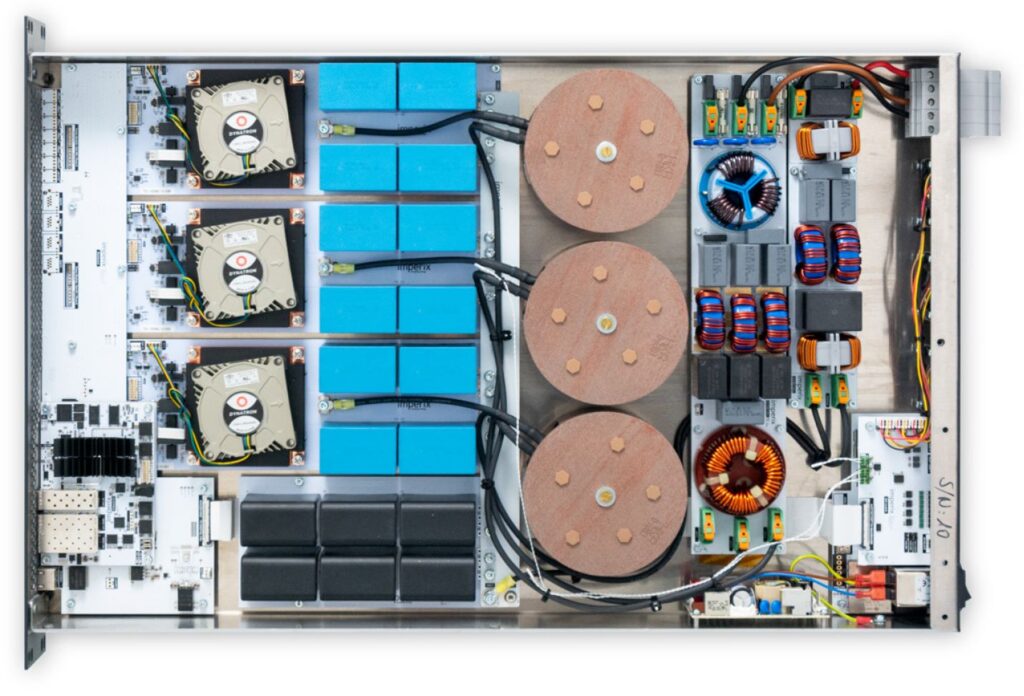
The research has focused on storage systems based on cascaded multi-level modular converters. This type of architecture, increasingly used in medium and high-voltage applications for its scalability, consists of independent modules, each of which has a battery, a set of control electronics and a DC–AC converter that turns the direct current (DC) used by cells and batteries into alternating current (AC), which is the kind of current used for transmitting electrical energy and in household sockets.
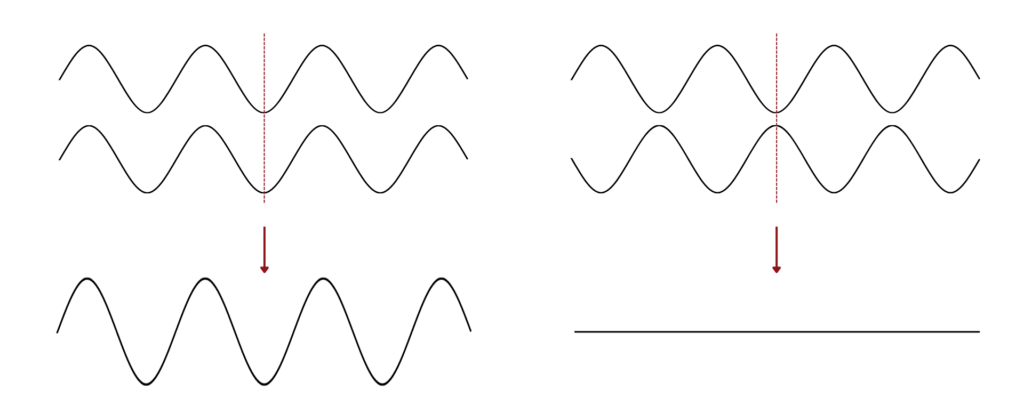
The researchers’ proposed solution takes advantage of this modular structure: instead of applying disturbance to a single battery in order to monitor it, they apply it to all the batteries in the system, although not simultaneously, but rather in specific phases. This is known as cadence and it ensures that when disturbances meet each other at the common output to the grid, they cancel each other out. In this way, each battery can be analysed whilst ensuring that the current that it delivers to the grid retains its normal shape and contains no interference.
Although on paper the system seems perfect, in practice it poses some challenges. The most significant is the effect of slight manufacturing inaccuracies in the electronic components that make up the system: ‘It is almost impossible to achieve the levels of precision required to completely cancel out these disturbances in a systematic way,’ Leyva admits. Consequently, they have developed a feedback-based control algorithm that constantly monitors variations in the electrical current of each module. This mechanism acts as a self-regulating system: it detects any misalignment caused by energy losses or manufacturing differences and adjusts it in real time to ensure that interference cancellation is virtually perfect at the network exit.
To demonstrate the practical validity of the method, the research team used a 3.84 kW laboratory prototype, configured with four modules. During tests, the system demonstrated its robustness, with disturbance remaining at around 2.9%, a figure virtually identical to that under normal unmonitored operation, compliant with international quality standards and far below the 8% disturbance that conventional reading methods can cause.
In addition to its precision, the system has other advantages over conventional methods. Since the control architecture prevents large fluctuations, it does not require high-capacity capacitors to dampen oscillations, making it simpler and more cost-effective to build and maintain. The methodology has been developed by a research team of professionals from Nanyang Technological University, Singapore, the University of Melbourne, City University of Hong Kong and the URV, and it is scalable and compatible with various types of configurations. It can be applied to stationary storage systems, renewable energy power plants or even electric vehicle charging infrastructures with modular architectures.
Reference: E. Nunes et al., “Online Monitoring of Batteries in Modular Multilevel Energy Storage Systems without Disturbing the Electrical Network,” en IEEE Transactions on Sustainable Energy, doi: 10.1109/TSTE.2026.3658335.
