The URV possesses simulated classrooms and laboratories for practical training in health-related degree programmes, and two leading centres in training, innovation and research: the CFIS and the CISTE
The best way to prepare students on health-related degree programmes, which at the URV are Nursing, Medicine, Physiotherapy and Human Nutrition and Dietetics, is by placing them in situations that are as similar as possible to those they will have to deal with when they work as professionals. And, to be able to do this, it is essential to have facilities with the right technology for creating realistic simulations. The various facilities of the URV’s Faculty of Nursing have simulation rooms with instruments and technology intended for student practice; at the Teaching Unit of the Sant Joan University Hospital in Reus there is the Centre for Training and Innovation in Simulation (CFIS), which provides ideal conditions for students from the Faculty of Medicine and Health Sciences to work on all of their basic clinical skills in a simulated medical setting, and the Terres de l’Ebre Campus is home to the Centre for Territorial Innovation and Simulation (CISTE), created by the URV’s Chair of Innovation and Simulation in Health in the Terres de l’Ebre, which, like the CFIS, is also available to professionals and the general public for continuing education and offers the most innovative methodologies in simulation.
In 2016, the CFIS began operating at Reus’s Sant Joan Hospital with the aim of providing ideal conditions in the form of medical simulation environments so that individuals could work on any of the basic clinical skills. The centre’s aim is to offer the best conditions for competently training students and healthcare professionals, and thus reduce the rate of medical error. As its director, Jordi Casanova, who is also a doctor at the same hospital and a full professor in the URV’s Department of Medicine and Surgery, states: “The centre fulfils a primarily educational function, aimed at two main groups. One of these is the general public, with health and life-support courses, and continuing professional development for healthcare professionals; and the other consists of students on the Faculty’s three degree programmes, who can access various types of activity throughout the academic year.” For example, there is the work directly related to the modules, many of which are compulsory, or there is the OSCEs (Objective Structured Clinical Examinations), during which the student has to treat a simulated patient played by a volunteer. This simulated patient, as Casanova explains, is also trained to act in line with a clinical condition or pathology, so that the student “can interview them as if it were a real consultation, or can examine them, or give them bad news like a difficult diagnosis, so that they can practice how to act in similar situations in real life”.
“These practical exercises are very useful because students practise both technical and non-technical skills, such as active listening, empathy and assertiveness,” says CFIS educator Cristina Pérez
The practical sessions in the simulated medical environment provided by the CFIS allow students to acquire a deep level of learning, according to Casanova, because they find themselves alone and without their tutor, just as they would be in in a real situation, and they have to use their own tools to resolve the situation as best they can: “For them, it is a highly formative experience. It provides practical, real-life insight; there is nothing more real than attending to a patient, so simulation allows them to train for success and to develop the tools they need to get by, even with complex patients like those they will encounter.”
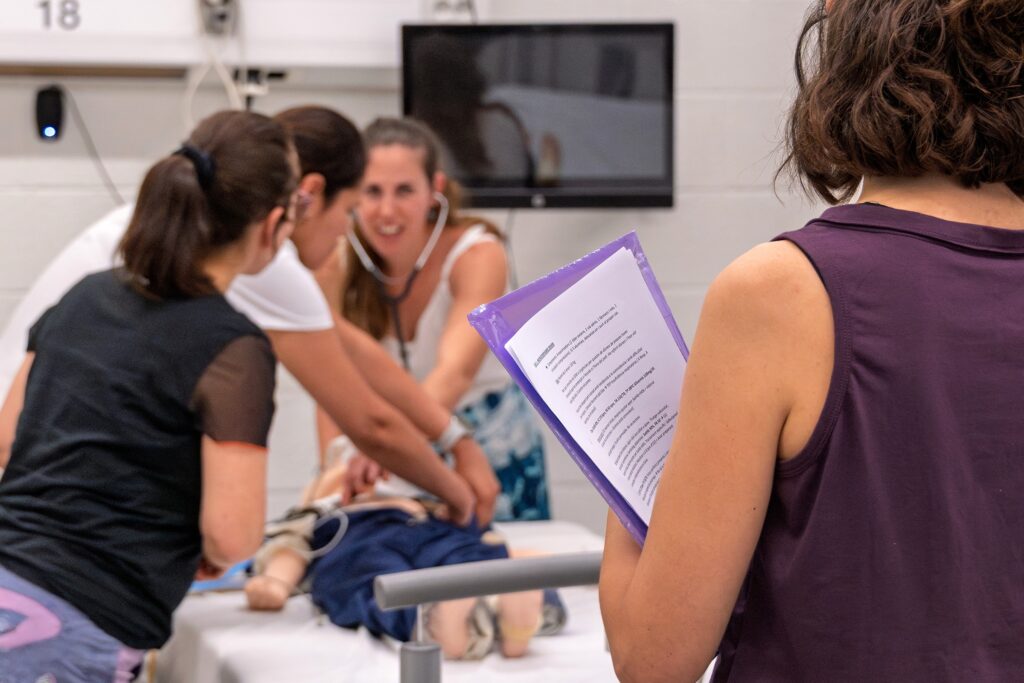
Cristina Pérez works at the CFIS as an educator, and is responsible for coordinating the training activities that take place there. These include those involving the simulated patients mentioned by Jordi Casanova: “These practical sessions are very useful because students can practise both technical and non-technical skills, especially communication skills, active listening, empathy and assertiveness. Doing this with a simulated patient in a safe environment is an absolutely necessary step before doing it in real-life situations.”
As an educator, Cristina Pérez is convinced about the usefulness of the facilities, especially the communication skills laboratory, where activities carried out with simulated patients are recorded “so that students can watch their own performances and assess themselves”. According to Cristina Pérez, in addition to providing technical and IT support, the facilities “promote this kind of active learning”. She goes onto point out that the simulated practice ensures that, even before undertaking placements with real patients, students have this background and learning, which is an added bonus not offered by all universities and which has a real impact on their training.
Gamification in simulation
A couple of years ago, the URV took part in the development of a pioneering pedagogical tool, a gamified virtual simulation for use in nursing classrooms. Created by the Advanced Nursing (Caring) and ARGET (Applied Research Group in Education and Technology) research groups, it involves simulating a real-life case through a first-person camera, in which you must answer the questions posed by the situation. The simulation involved actors, costumes, make-up, staging and the participation of professionals from the Catalan Emergency Medical Services to add a sense of realism and as a result was not, so different from, for example, the way a short film is produced. In addition to the simulation, the project also includes pedagogical guides for using and, above all, creating new simulations.
Josep Maria Barroso, a paediatrician at Sant Joan Hospital and a professor of paediatrics at the URV, is part of one of the centre’s simulation teams, which run training courses for doctors, residents and students. In his case, this involves, for example, training students to manage critically ill children. There are courses where the theoretical content is complemented at the end by a workshop at the CFIS in which students “put all the knowledge acquired into practice”.
Casanova also highlights another reason why having a centre of this kind is so important to the URV and the region, namely because it opens the door to teaching innovation: “Often we have ideas that we want to bring into the classroom but we’re not sure how to introduce them, and the CFIS can provide a support structure that enables us to do this.” According to Casanova, this capability puts the URV on a par with other high-level public and private universities. Having spaces for simulation training, research and teaching innovation, “motivates the teaching staff as much as the students, including when it comes to carrying out research projects.”
“Teaching and improving teaching are very important and we sometimes neglect them,” admits Casanova, who affirms that the CFIS is committed to continuing to open up to the public and to improving the training of the professionals, especially residents and those in their early years, and that it is already looking ahead to the modern and spacious facilities in the future Faculty of Medicine and Health Sciences on the Bellissens campus. The CFIS has the collaboration of the Tarragona Provincial Council, the Tarragona College of Physicians and the Reddis Private Foundation.
Simulation laboratories in Nursing
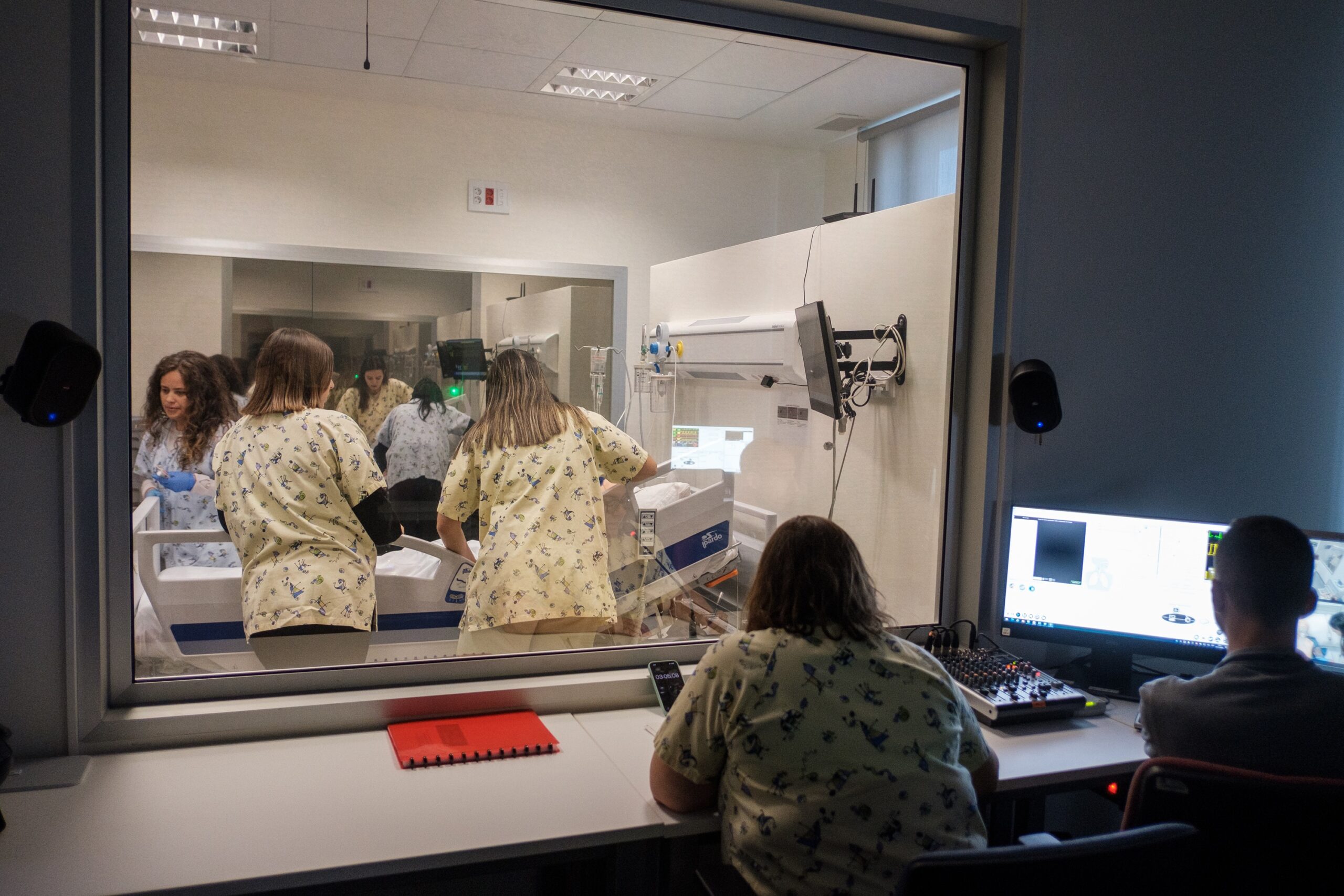
URV Nursing students, spread across the Catalunya and Terres de l’Ebre campuses and the Baix Penedès and Vilafranca sites, also undertake practical training in highly realistic immersive simulations and simulated clinical environments. They have access to the so-called high-fidelity laboratories, which feature the most advanced technologies for reproducing real-life situations and reactions between professionals and patients. At the Catalunya campus, for example, there is a realistic recreation of an Intensive Care Unit (ICU) where students can train without putting real patients at risk.
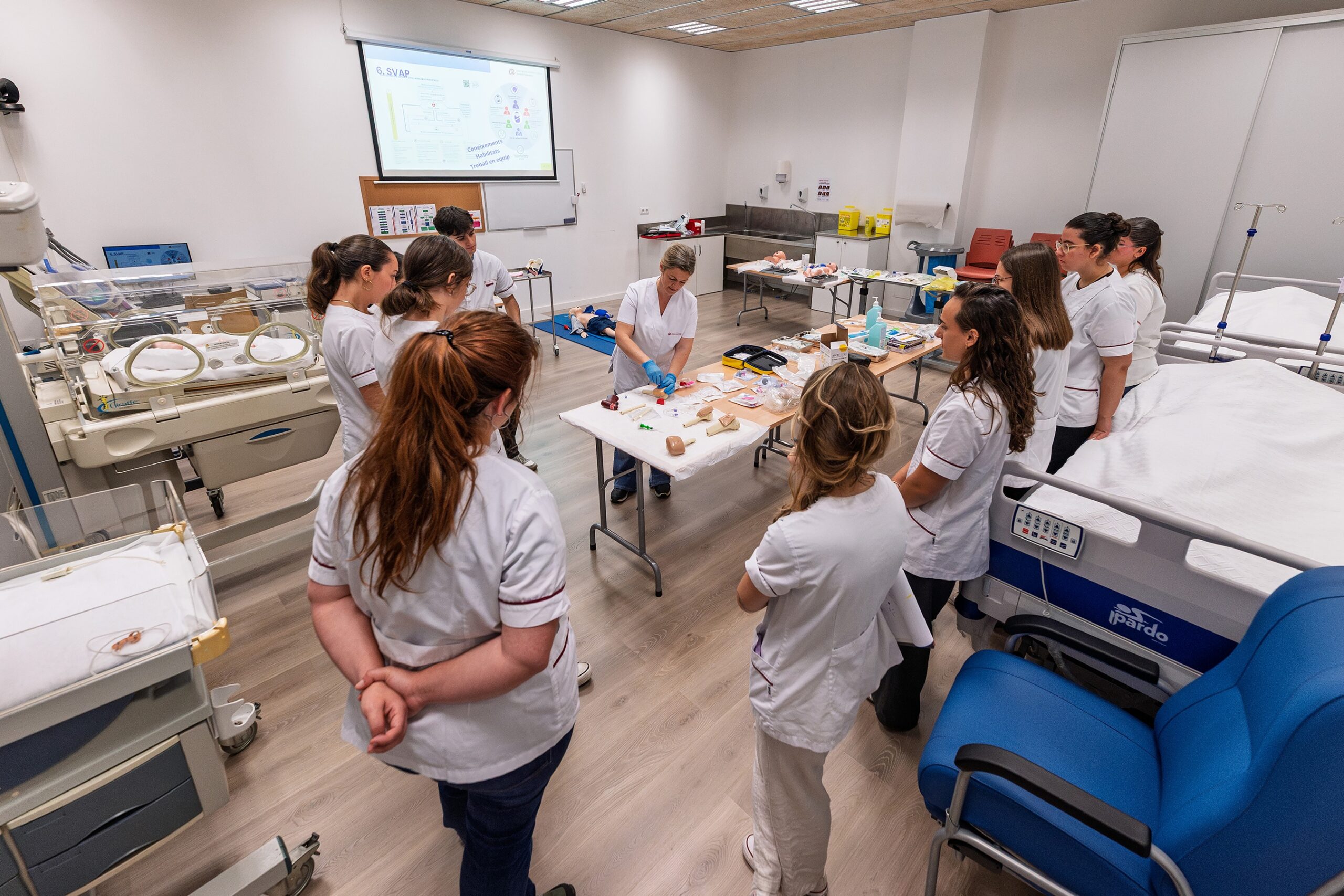
The space allows students to apply their degree knowledge in a practical, controlled environment with advanced technology, such as state-of-the-art simulator mannequins (adult, paediatric and neonatal) that react physiologically like real patients. Furthermore, the space incorporates audio and video systems so that student interventions can be analysed in real time or at a later date via the Moodle platform.
The students are grateful for the opportunity to undertake practical work in simulated environments that are very faithful to reality because it means that they can leave the University “much better prepared and with greater confidence to go into the profession”
Famara Guerra and Maria Mora are two of the first students to graduate from the inaugural Bachelor’s Degree in Nursing, which began four years ago at the Vilafranca site. From the outset, the centre has had simulation rooms, very similar to those found in placements at medical centres, and which have played a “key” role in their training, enabling them to emerge “much better prepared and with more confidence to face the profession”. In these simulated environments, they undertake courses, mostly compulsory and practical, which prepare them in the procedures, assessments and clinical care most common in nursing practice. The progressive learning of clinical skills “in an environment free from the stresses of real-life situations” allows them to acquire knowledge, skills and attitudes before coming into contact with patients and their families.
Innovation and simulation in the Terres de l’Ebre
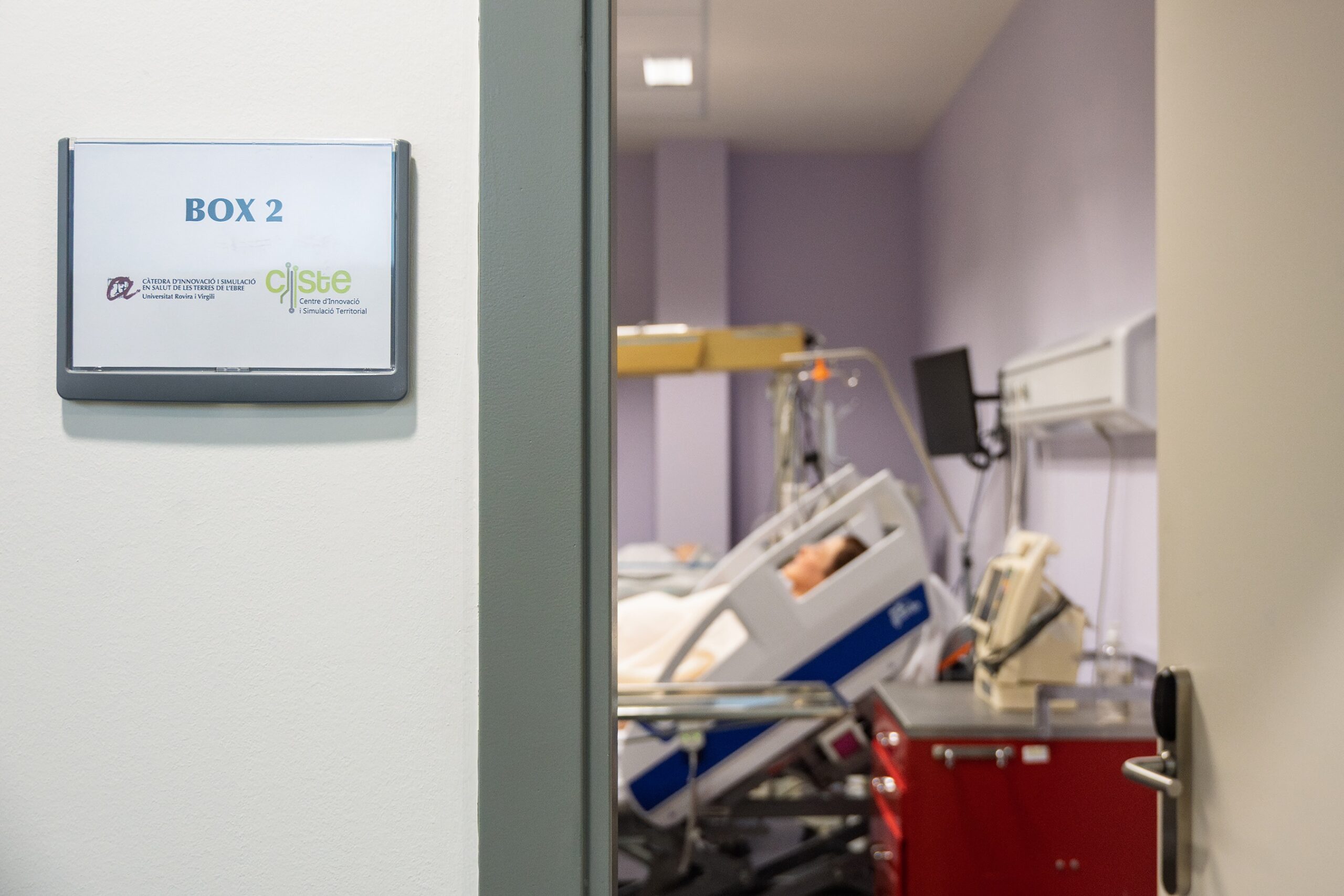
The URV’s Chair of Innovation and Simulation in Health in the Terres de l’Ebre created the Centre for Territorial Innovation and Simulation (CISTE) in 2023. Located on the URV’s Terres de l’Ebre Campus, the centre was created with the aim of meeting the training needs of the region’s healthcare professionals, from both the public and private sectors, through innovative simulation-based methodologies. Since its launch, the centre has progressively expanded its scope and now hosts not only professionals and students from the healthcare sector, but also people from other disciplines such as business, education, sport, emergency services and security. As a result, it has established itself as a leading centre open to the entire region for training, research and knowledge transfer.
Top-level international accreditation for the CISTE
The Centre for Territorial Innovation and Simulation has recently been accredited by the Society for Simulation in Healthcare (SSH), considered the leading international authority in the field of clinical simulation. With this accreditation, the CISTE became the first centre in Catalonia and the second in Spain to receive this distinction, alongside the European University of Madrid. The recognition places the URV in a leading position within the simulation-based health training ecosystem. The centre is managed by the Chair of Innovation and Simulation in Health in the Terres de l’Ebre, which promotes interdisciplinary reflection and outreach in the field of innovation and simulation, and facilitates the connection between the university, local stakeholders and the productive sector.
The SSH accreditation is an international seal of quality, rigour and excellence that recognises the centre’s methodology, the talent and solidity of its multidisciplinary team, its commitment to continuous improvement, and the impact of the training and research activities it carries out. The opening of the CISTE was made possible by grants from the Ministry of Innovation and Science (MICINN) awarded to the Dr Ferran Foundation and the URV Foundation, the Tarragona Provincial Council, and the Institute for the Development of the Ebro Region (IDECE).
In the academic sphere, the centre plays a key role in the training of undergraduate nursing students at the Terres de l’Ebre Campus, who take part in teaching activities based on clinical simulation. These methodologies reinforce practical skills and decision-making in safe, controlled environments, bringing real-world care closer to the classroom. Overall, this training model enhances the preparation of future healthcare professionals through high-value practical learning experiences.
The centre is equipped with state-of-the-art technology, including systems for synchronous recording and transmission of activities, as well as separate pre-briefing and de-briefing rooms. The facilities are kept permanently up to date in line with the most demanding international standards in clinical simulation.
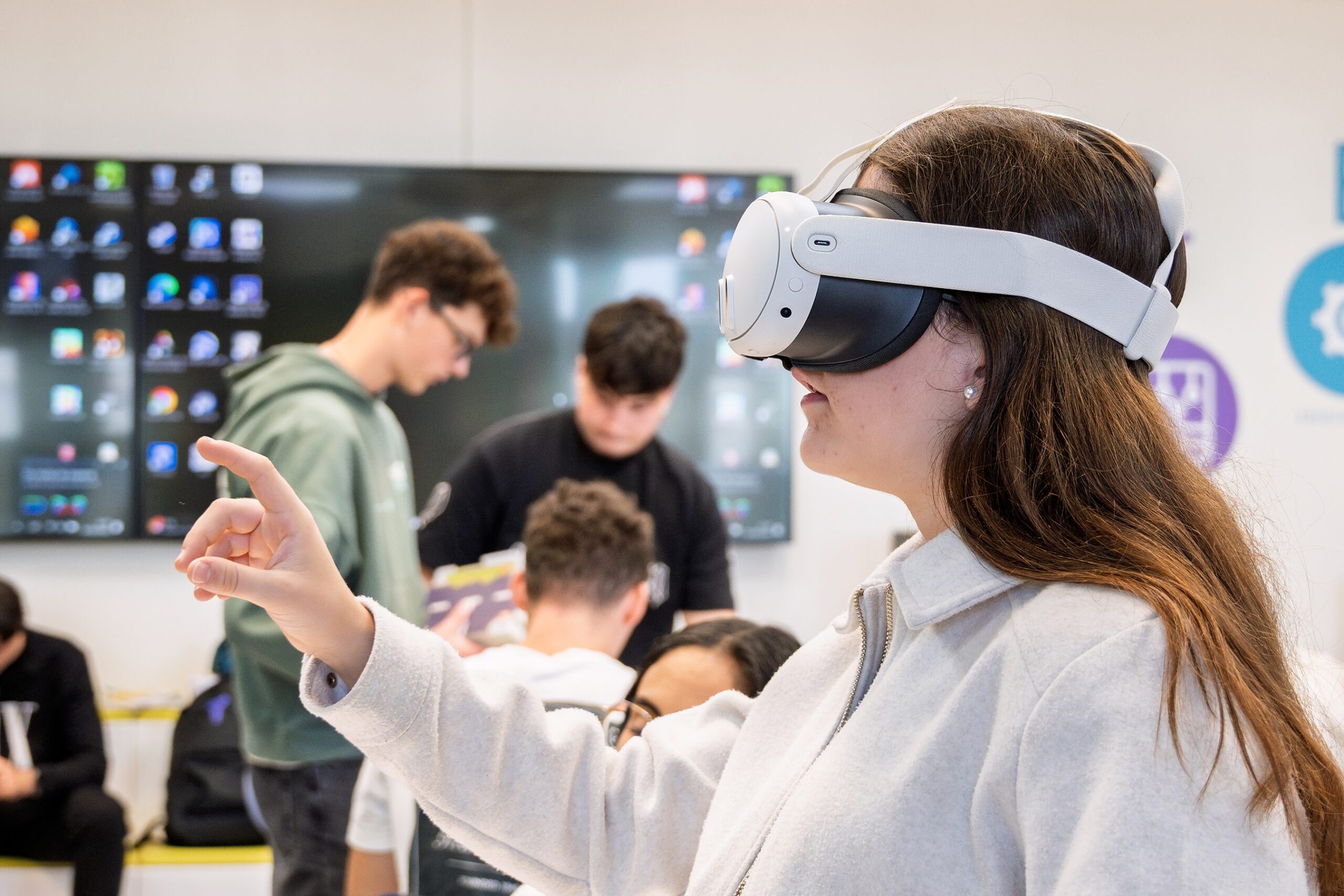
The CISTE’s facilities are located on the third floor of the Terres de l’Ebre Campus and cover over 200 square metres. The centre has, for example, high-fidelity, hyper-realistic mannequins and clinical equipment and devices. It also offers immersive technology, a virtual wall and 3D-printed models, which allow for a more experiential training experience, and virtual and augmented reality tools so that students can work in a metaverse tailored to the required specific professional setting. Like the CFIS, it also has tools for recording and transmitting the activities that take place there. Its technology, as with the rest of the simulation centres and classrooms at the URV, is always kept up to date, in line with the most demanding international clinical simulation standards.
Sílvia Reverté, Director of the Chair, points out that since the centre offers technologically equipped spaces and methodological expertise in simulation, it can cater to different fields. For example, it can be applied to healthcare to improve patient safety and the efficiency of clinical teams; to business, in terms of relational and managerial skills; and, obviously, to education and teaching innovation, with the development of creative techniques for learning. Thus, the CISTE offers a wide range of over 50 courses and a continuing training catalogue aimed at healthcare professionals, and, it has become, as Reverté states, “a point of reference” that enhances professional qualifications in the healthcare sector and other fields. As a centre, it brings together the various public and private healthcare entities to identify common training needs and encourages their participation in the programme, “in order to offer specialised training in the region, without additional travel costs and time, making it an attractive proposition,” she concludes.
Furthermore, the centre collaborates intensely with academic institutions, research groups and public and private entities, a process that further stimulates projects for teaching innovation in advanced technologies, artificial intelligence and simulation with humanised simulators. In the field of lifelong learning, it has offered micro-credentials, that is short-term learning experiences accredited by scientific societies and leading institutions and aimed at healthcare professionals from across Catalonia and the rest of Spain. At the same time, it hosts students on vocational training and promotes gender-sensitive initiatives, thus consolidating an inclusive and innovative training model. CISTE also has indexed scientific output and proprietary methodologies registered as intellectual property, which demonstrate the impact of its teaching model.
CISTE, therefore, promotes the transfer of knowledge and innovation in training in the Terres de l’Ebre. Since the centre was established in this region, all areas within the URV’s sphere of influence, from Reus and Tarragona to the Penedès, have had specific spaces for high-fidelity simulation, with high-fidelity mannequins and all the tools and technologies that allow students to develop skills and competencies in a safe, realistic, immersive and, above all, reflective environment and to improve their professional learning outcomes. All of this is underpinned by an approach that views training and research as cornerstones for fostering progress and improving professional care in the healthcare sector as a means of contributing to society’s quality of life.