15/01/2026
Three new grape varieties identified on the island of La Palma
A research team from the URV has studied 96 vine samples from the island and concluded that the volcanic episode of 2021 did not cause significant losses in wine-growing biodiversity
A research team from the URV has studied 96 vine samples from the island and concluded that the volcanic episode of 2021 did not cause significant losses in wine-growing biodiversity
The Canary Islands are known worldwide for their mild climate, volcanic landscapes and the great biodiversity of their ecosystems. What many people do not know is that they are also a major player in the world of wine. On the island of La Palma alone, there are seven exclusive grape varieties out of the forty that can be found throughout the archipelago. One of the reasons for La Palma’s rich wine heritage is its geography, which is responsible for the existence of several microclimates that both enable different varieties to be grown and affect the characteristics of the grapes and wine. The isolation of this island ecosystem is another factor that, over time, has contributed to the fact that nowhere else in the world are so many different varieties to be found rubbing shoulders.
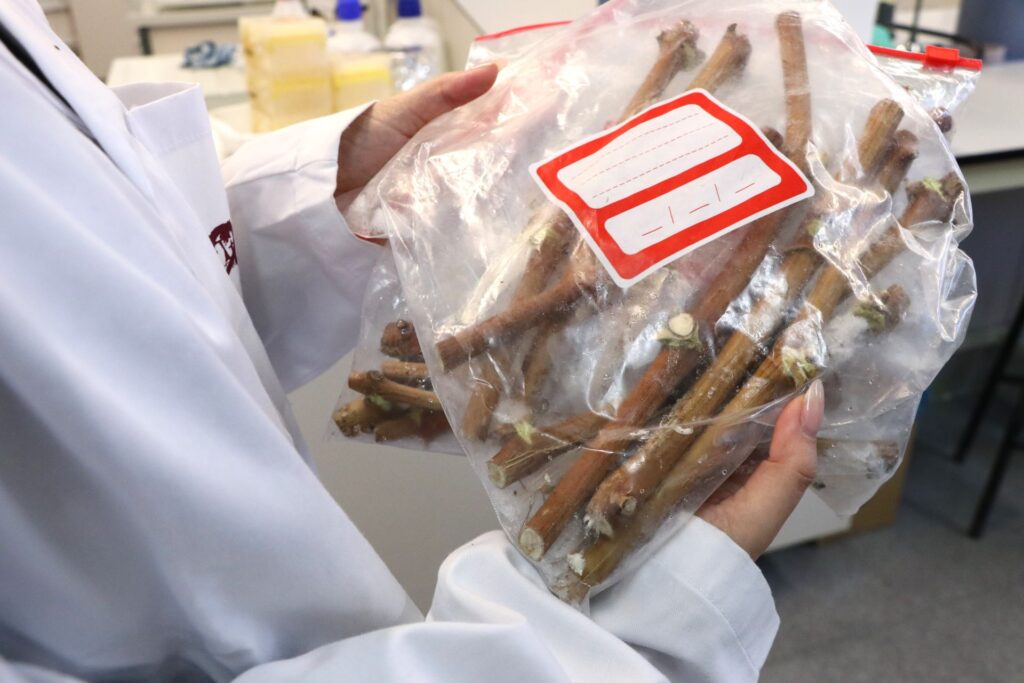
In the midst of this wealth can be found a research team from the URV’s Department of Biochemistry and Biotechnology, led by Francesca Fort, who has been studying the genetic identity of Canarian vines for many years. On this occasion, they studied 96 vine samples from La Palma to identify new mutations and potential unknown varieties. It all began when the island’s agricultural technicians asked farmers to report any vines whose variety they were unable to identify. When the technicians visited the vines, they took woody samples (if appropriate), identified them and sent them to the laboratories at the URV.
From vine to DNA
Once in the laboratory, Fort and her team prepare the samples for DNA extraction. The first step is to discard the outer woody part and pith of the vine shoot. What remains is ground into a powder using a special mill that cools the sample to -180 degrees with liquid nitrogen. “You have to work at low temperatures to inhibit the enzymes that degrade DNA,” explains Qiying Lin-Yang, a researcher at the URV.
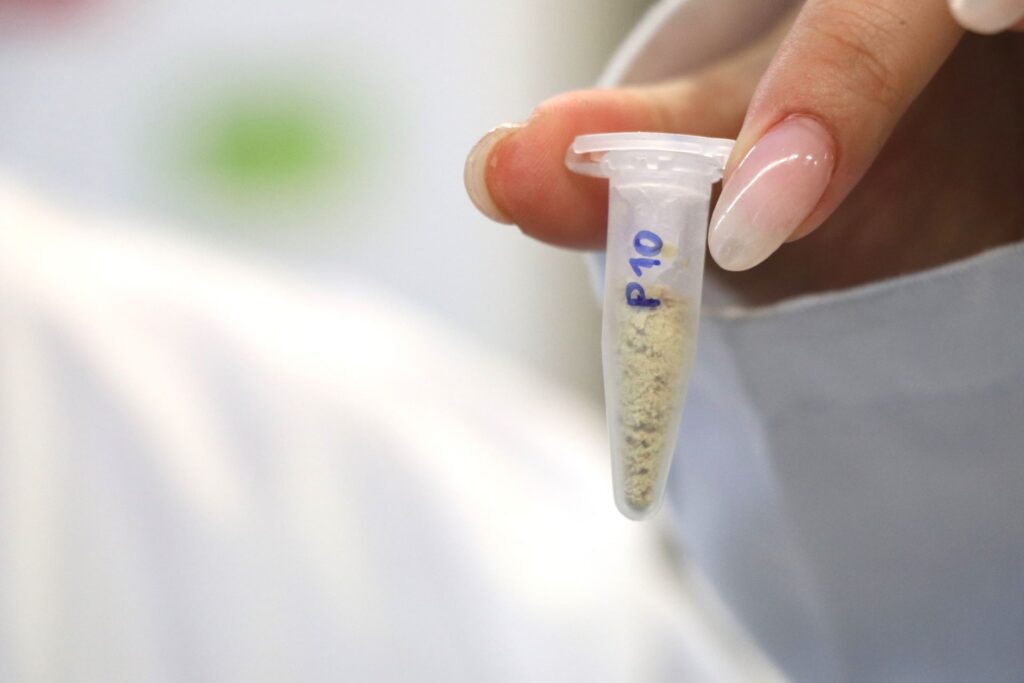
To extract the DNA, the powder is subjected to a very specific and complex protocol developed by Fort’s team over many years of experience. Once the nucleic acid containing the genetic information that characterises individuals has been extracted, certain regions must be amplified so that they can be analysed using a procedure called “polymerase chain reaction”.
Also known as PCR, this technique creates millions of copies of specific regions of DNA that researchers can analyse in the sequencer, a device that allows them to compare the genetic similarity of the samples: “If we find a sample with genetic differences greater than 15%, we consider it a new variety; if it does not reach this threshold, we classify it as a mutation.”
Three unknown varieties
The results of the analysis revealed that there were 44 different genetic profiles among the 96 samples received. This means that 52 samples (the remainder) were redundant. Among these 44 unique profiles, the research team was able to identify 31 different varieties, 28 of which were known to them: “We can carry out this type of study because we have always studied the same regions of DNA. This means we have one of the most comprehensive databases in the world in this field,” explains Fort. Thus, three of the samples analysed corresponded to varieties that, although they have been cultivated for years, were unknown to the authorities and the scientific community. They have been named Aromática Eufrosina, Cagarruta de Oveja and Viñarda Rosada.
In addition, the research also detected 16 previously unknown vine mutations: 14 through differences in DNA and two through grape colour. Fort explains that, as they do not sequence the entire genome of the plant, it can happen that DNA differences are not detected in the fragments they analyse, but that they nevertheless exist in other parts of the double strand.

Vines in the shadow of the volcano
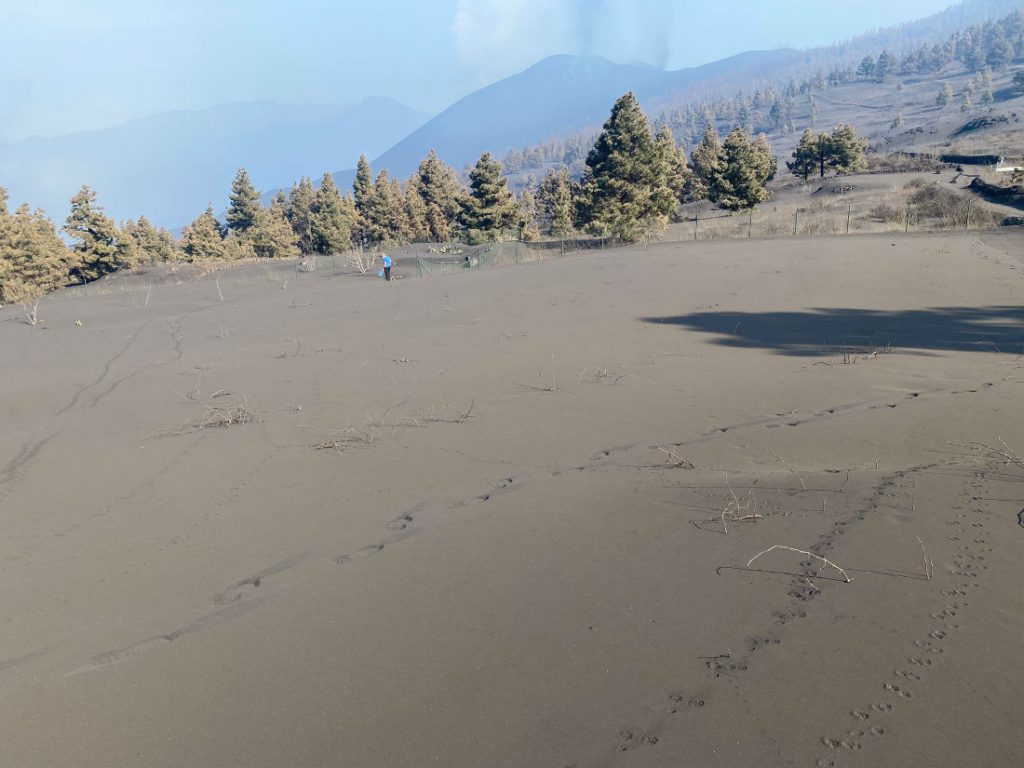
The most recent volcanic eruption on La Palma began in the Cumbre Vieja Natural Park on 19 September 2021. The episode lasted 85 days, during which the volcano expelled nearly 200 million cubic metres of material, affecting more than 1,200 hectares. The vineyards were no exception, with an estimated 40 out of the 480 hectares on the island being completely buried.
Of the 96 samples received by the URV team, 14 came from specimens that were buried by lava or ash from the eruption. Among these, the research team recorded four mutations: three are found on other islands in the archipelago, but one was unique to the affected area. Although Fort reveals that it would not be impossible to reproduce the plant from the sample they have stored, she also points out that the mutation is very similar to the original variety and, therefore, the resulting plants would be almost identical to those that already exist.