06/02/2026
URV Solidària offers resources to the displaced University community
Iranian students and researchers affected by the conflict in their country have received psychological support in recent days, while Ukrainian students impacted by the war have access to specific grants to help them continue their studies
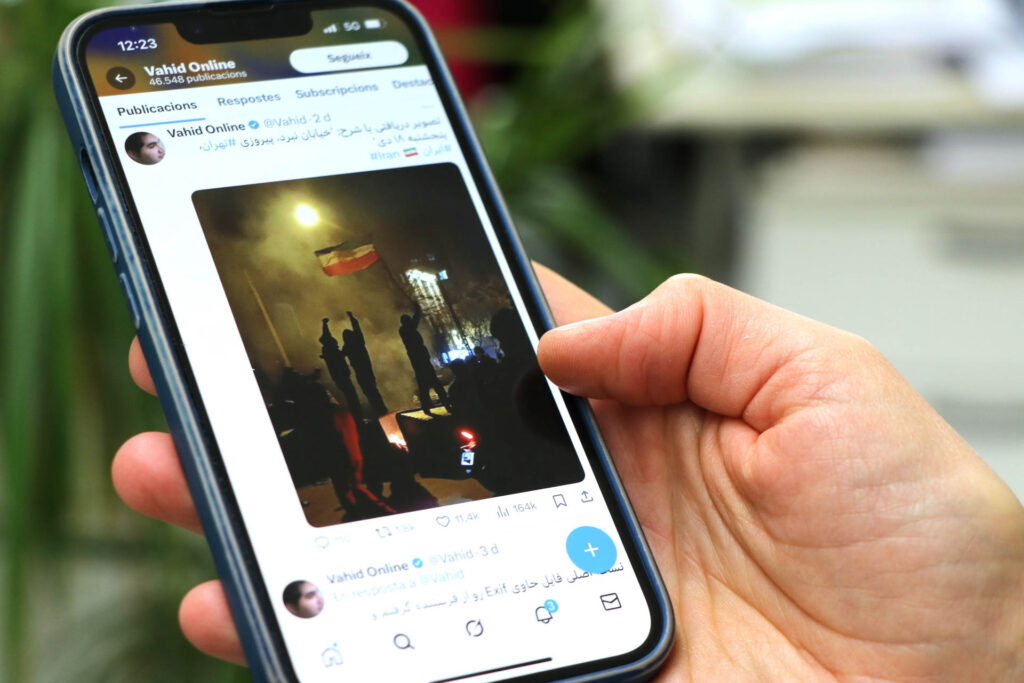
Iranian students and researchers affected by the conflict in their country have received psychological support in recent days, while Ukrainian students impacted by the war have access to specific grants to help them continue their studies
According to the latest UNHCR report from June 2025, 123.2 million people worldwide have been forcibly displaced due to persecution, conflict, human rights violations and public disorder. The world is experiencing overlapping refugee crises, which started with Syria in 2011, followed by Afghanistan, Venezuela, Ukraine, Palestine and, in recent weeks, Iran.
These emergency situations also affect various parts of the URV community, for example, the 53 students and teaching/research staff from Iran. URV Solidària has reached out to these members of the community to find ways to alleviate the consequences of the Iranian government’s repression. Joan Fuster, who works at URV Solidària, notes that while these people may not yet have been “legally” classified as displaced persons or refugees, they are still facing the same challenges.
Psychological care, financial assistance and awareness
Ahmad Rahdari, a doctoral researcher in the Department of Computer Engineering and Mathematics, describes the situation: “For nearly two consecutive weeks, many of us had no news from our families and loved ones in Iran due to the shutdown of the internet and international communications, which placed the country in a state of almost complete digital blackout. But the news and reports that we have been getting have caused us extreme distress. Some members of our community have also lost close relatives and are currently grieving”.
In response, URV Solidària has channelled requests for help to the University’s Psychological Care Service, and is currently working on ways of providing financial assistance for those whose family support from Iran has been cut off or made impossible by the current situation. Rahdari explains that “a number of Iranian students are financially supported by their families back home in Iran, but the current situation has made it extremely difficult or impossible for them to receive this support, creating serious problems for them”.
Other members of the Iranian academic community at the URV provide a broader perspective on the current situation in Iran in this article.
Emergency protocol
The assistance provided by URV Solidària is possible thanks to two key frameworks that enable the University to activate the necessary resources in case of an emergency. The first is the Protocol to provide assistance for URV community members in situations of special vulnerability, humanitarian emergency or displacement. This protocol establishes what any unit or member of the University must do if they receive a request for special help from students, teaching and research staff or administrative and service staff in one of these situations, with a particular focus on refugees or displaced people. URV Solidària is responsible for channelling measures to ensure that they get equal access to basic services and to having their needs met.
According to Joan Fuster, the circumstances of those requiring assistance vary considerably, from students on campus to those in hybrid or distance learning programmes located directly in conflict zones. For example, the framework even recently helped cover the final payments for a Palestinian student completing her doctoral degree at the URV.
The second protocol was adopted by all Catalan universities in November 2025 and is a set of guidelines governing the academic reception of refugees or assimilated people.
Tuition grants for Ukrainian students
“We are at a very critical moment in which one crisis comes hard on the heels of another, and that state of affairs doesn’t look like it will change anytime soon,” points out Fuster. For this reason, in addition to protocols that seek to deal with the immediate emergency, the URV has other lines of assistance, such as the tuition grants provided with the help of funds from the Spanish Ministry of Education over the last three academic years for students affected by the conflict in Ukraine.
Currently six Ukrainian students are studying at the URV thanks to these University tuition grants, and applications for grants will remain open throughout the academic year until the budget is exhausted.
Cooperation projects by the University community
Another line of assistance available comes in the form of grants to fund development cooperation projects led by members of the URV community. These aim to transfer knowledge and technology developed by URV staff and students to assist in the eradication of poverty, the promotion of peace and gender equality and the protection of the environment and human rights. The rules of the grants give preference to countries identified as geographical priorities in the Catalan Government’s annual development cooperation plans.
Information about all of these forms of assistance can be found on the URV Solidària website.
