16/07/2026
Oenology student Genís Espinós represents young farmers from across Spain
He balances his studies with managing the family winery and his role as president of UPA Joven at a decisive time for the agricultural sector
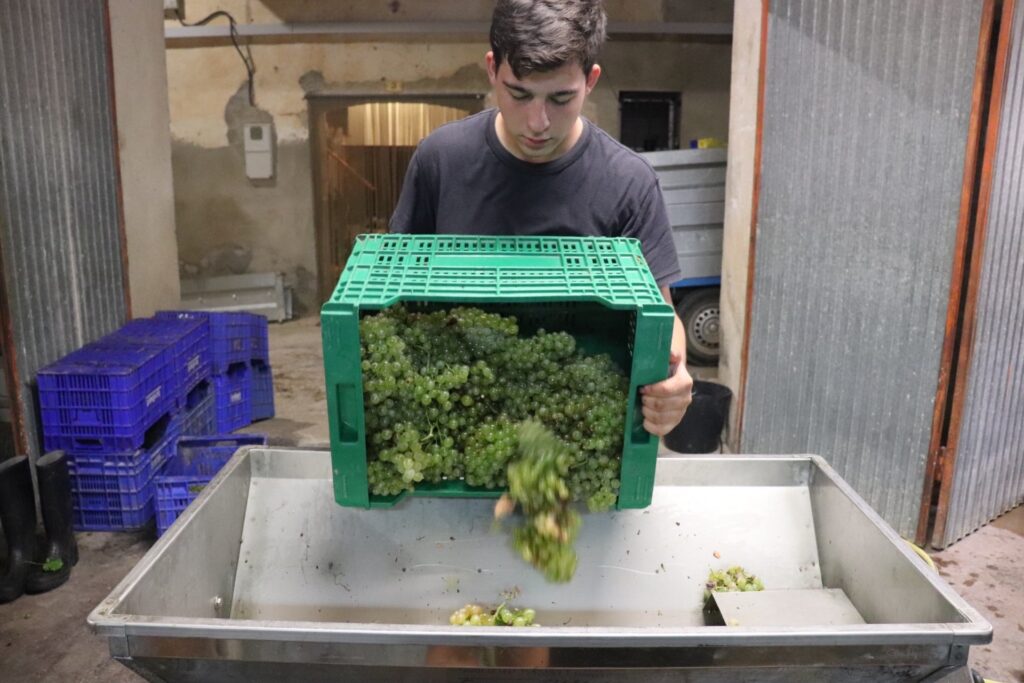
He balances his studies with managing the family winery and his role as president of UPA Joven at a decisive time for the agricultural sector
Genís Espinós Alcoverro, a student on the Bachelor’s Degree in Oenology at the Universitat Rovira i Virgili, has taken on the national presidency of UPA Joven, the youth wing of the Small Farmers’ Union, the professional agricultural organisation that represents and defends the interests of small farmers. The student combines his university studies with his daily duties at the family business, the vineyard Celler Cal Minyó, in Prat de Comte (Terra Alta).
For Espinós, the new position is “both a great responsibility and an honour” and he goes on to explain that he is relishing the moment for the opportunity it gives him to represent young farmers from across the country at a decisive time for the agricultural sector. “I believe it is time for young people to play a leading role in the decisions that will shape the coming years,” says the URV student.
The future of the countryside
His main objective during his term in office is to facilitate the entry of new young people into the sector, warning that “without a generational changeover, there is no future for the countryside”. To this end, he will work to make UPA Joven a more accessible, useful and visible organisation, focusing on training, new technologies and the defence of the sector’s interests.
Espinós points to several clear obstacles that make it difficult for young people to access agriculture, such as the high initial investment, bureaucracy, the difficulty in accessing land and finance, and the low profitability that many farms often have. Furthermore, he identifies a problem of social perception because the work is not held in sufficient esteem, leading him to call for “policies that facilitate young people’s entry into the sector and enable them to make a decent living from their work”.
University education and the future of the wine sector
His training at the Faculty of Oenology has played a fundamental role in his journey, both technically and scientifically, and in his personal development. Genís describes how the university has given him the tools to develop a more critical, open and analytical way of thinking and to understand that behind every technical decision there are also questions of business strategy, sustainability and responsibility towards the land.
As for the future of the wine industry, Espinós considers technological innovation such as precision agriculture or artificial intelligence to be important for ensuring more efficient and sustainable production. However, he stresses that this technology must always be accompanied by the experience of professionals, arguing that the future involves combining tradition and innovation.
Working the land, more than a profession
Espinós’s connection with the world of wine production began in his childhood. Although there was no tradition of professional farmers in his family, the year before he started his training at Gandesa Agricultural School, his family planted three small strips of vineyard and bought very basic equipment. He recalls the impact that the first harvest had on him, “More than making wine, it was a family celebration: we all pitched in together, shared the work and I saw how the grapes were transformed into wine. That experience completely captivated me.”
Now, the new president of UPA Joven is encouraging young people to look at the world of agriculture without preconceived ideas, reminding them that the countryside needs a new generation with training, ideas and a desire to innovate. “Working the land is much more than a profession: it’s about contributing to the production of quality food, caring for the landscape, preserving the territory and keeping our villages alive,” reflects Espinós.
