09/07/2026
Seafood-based ready meals can absorb chemical contaminants during packaging and processing
A URV study analyses 29 substances in commercial products sold in Tarragona for the first time and concludes that the levels detected do not pose a significant health risk
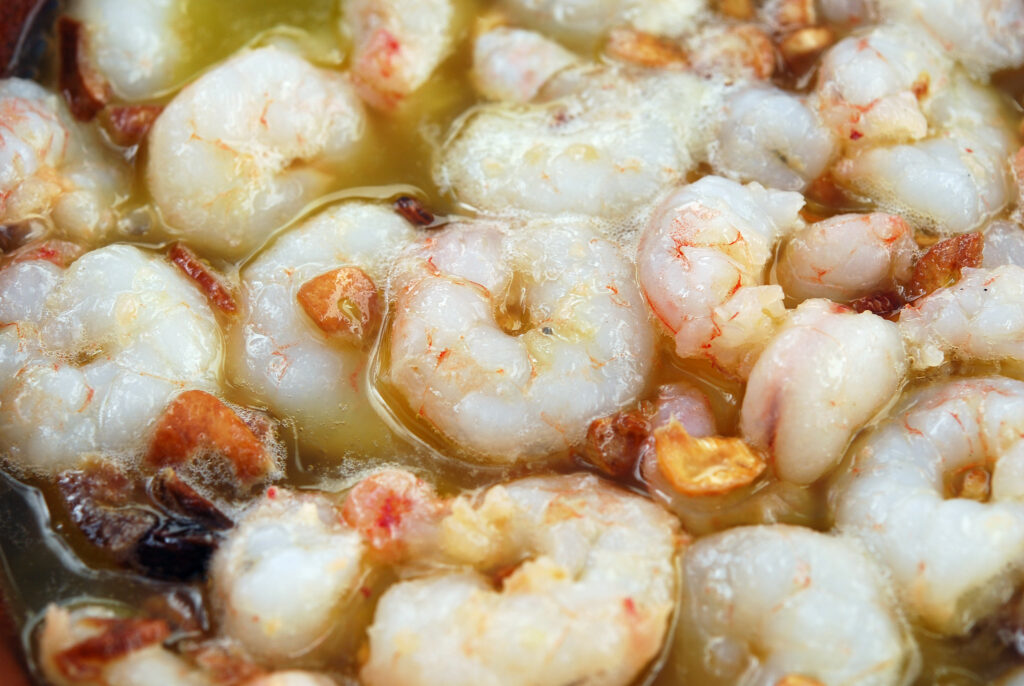
A URV study analyses 29 substances in commercial products sold in Tarragona for the first time and concludes that the levels detected do not pose a significant health risk
Ready meals containing fish and seafood can expose consumers to chemical contaminants that are present in the environment or introduced during processing and packaging. A study by the Universitat Rovira i Virgili (URV) has, for the first time, analysed the presence of a wide range of high-volume chemical substances in ready-made fish and seafood dishes sold in Tarragona.
The research team looked for 29 compounds belonging to five chemical families — phthalates, organophosphates, benzothiazoles, and synthetic fragrances — and detected most of them in at least one of the samples studied. Phthalates were the most prevalent contaminants in most of the dishes, especially in two samples made with hake, whereas organophosphates were found to be more prevalent in mussels. Despite the presence of these contaminants, the risk assessment concluded that the levels detected do not pose a significant health risk.
The research, published in the journal Analytical and Bioanalytical Chemistry, studied 18 commercial products that were pre-cooked, fresh, chilled or frozen and made with some of the most commonly consumed species in Catalonia: squid, salmon, mussels, prawns, sardines, hake and cod. The aim was to determine whether these foods contained chemical compounds widely used in industry and consumer products, and to assess whether their ingestion might pose a risk to health.
The 29 substances analysed are used in a wide variety of applications, such as plastics, packaging materials, textiles, paints, coatings, personal care products and cleaning products. Some can enter the aquatic environment where they accumulate in marine organisms, but they can also migrate into food from packaging materials, especially during storage, cooking or reheating. The researchers’ findings indicate that the levels found in ready meals are, in general, slightly higher than those described in previous studies of raw fish and shellfish from the same area. According to the authors, this suggests that other factors such as “industrial processing and packaging may increase the presence of these contaminants in food”, although they point out that, even if this is the case, the study does not attribute the contamination to a single source. Various factors may be involved, such as the product origin, species type, fat content, cooking process, preservation method and packaging materials.
The type of species and fat also have an influence.
The research also analysed whether the fat content of the species influenced the presence of these compounds. Organophosphates, synthetic musks and benzensulphonamides were found in higher concentrations in species with a higher lipid content, a finding consistent with their tendency to accumulate in fatty tissues. In contrast, phthalates were more abundant in species with less fat, especially in hake dishes, which reinforces the hypothesis that external sources, such as contact with plastic materials or processing and preservation methods, may be involved.
To estimate population exposure, the research team calculated the potential intake of these compounds in six population groups: adult men and women, boys and girls aged 10 to 19, and men and women over 65. Older men were the group with the highest exposure, mainly because, according to the consumption data used in the study, they ate the most fish and shellfish. Cod dishes were the main sources of exposure, both because of the concentrations detected and because cod is one of the most widely consumed species.
Levels below concern threshold
Despite the presence of these contaminants, the risk assessment concluded that the levels detected do not pose a significant health risk. For all the compounds, both carcinogenic and non-carcinogenic, the values were well below the thresholds considered to be of concern. In the most unfavourable scenario, the highest non-carcinogenic risk value was observed in a dish of steamed hake with rice and prawns in sauce, but it still remained clearly below the threshold.
The research team stresses that their results do not call into question the benefits of consuming fish and seafood, which provide quality protein, vitamins and omega-3 fatty acids as part of a healthy diet. What they do highlight is the importance of analysing the state of food as it reaches the consumer. Until now, most studies have focused on raw products, but current eating habits have led to an increase in the consumption of ready-made meals. Analysing these products, therefore, provides a more realistic view of the population’s actual exposure to chemical contaminants.
The main conclusion of the study is that the chemical compounds analysed are present in pre-cooked seafood-based meals sold in Tarragona, and that packaging and processing can influence the levels detected, although under the conditions analysed, exposure to these levels does not pose a significant concern for human health.
Reference: Borrell, L., Borrull, F., Aguilar, C. et al. High production volume chemicals in pre-cooked seafood-based meals consumed by inhabitants of Tarragona (Catalonia, Spain): presence and risk assessment. Anal Bioanal Chem (2026). https://link.springer.com/article/10.1007/s00216-026-06521-2#citeas
