23/06/2025
Four URV students take part in the Aurora network’s Spark Social programme
They have travelled to Reykjavik to co-create solutions to global challenges related to educational innovation and digital sustainability
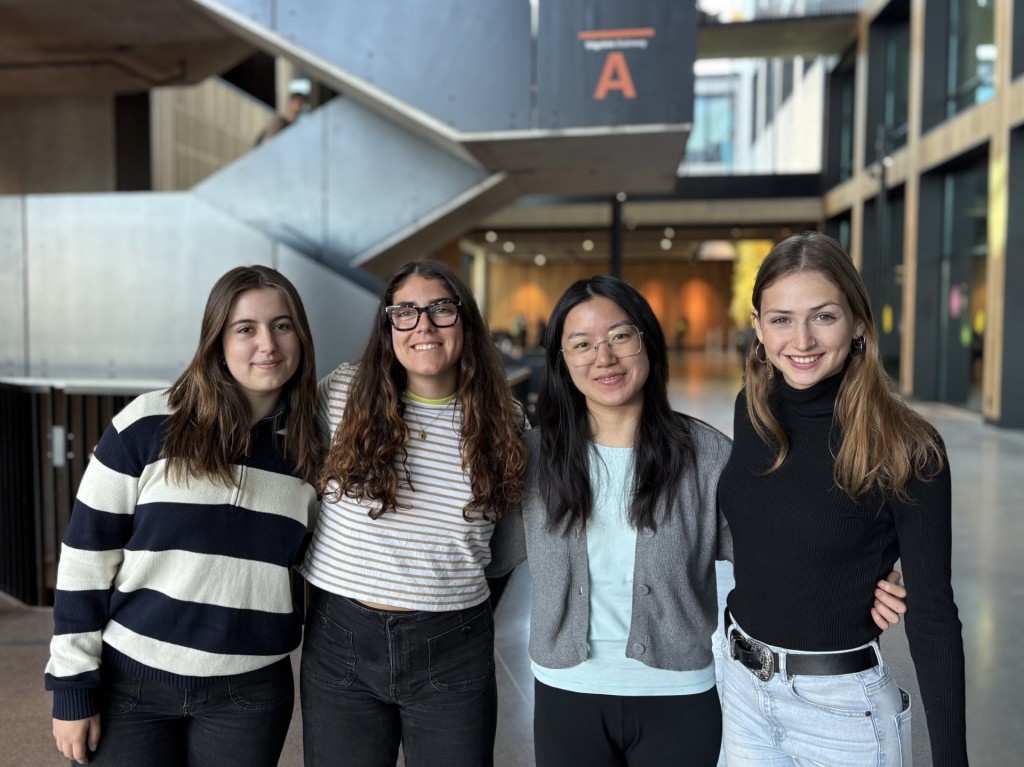
They have travelled to Reykjavik to co-create solutions to global challenges related to educational innovation and digital sustainability
The Háskóli Íslands (University of Iceland) has held its Spark Social project for another year. This is an initiative in the format of a Blended Intensive Programme (BIP) within the framework of the Aurora European university network, and its aim is to bring together groups of students from different universities to co-create social entrepreneurship projects that help advance the UN’s 2030 Sustainable Development Goals (SDGs). The URV students Mireia Mei (Interuniversity Master’s Degree in Health Data Science), Ruth Prats (Bachelor’s Degree in Advertising and Public Relations), Laia Daura (Bachelor’s Degree in Psychology) and Natalia Rodríguez (Bachelor’s Degree in Audiovisual Communication and Bachelor’s Degree in Advertising and Public Relations) were all selected to participate.
After several virtual sessions between January and April, the programme culminated in a five-day stay in Reykjavik, where the teams worked to define and test solutions to real challenges. The methodology used was a combination of transitional thinking and design thinking, which fosters creative solutions to complex social problems, social innovation through empathy, collaboration and prototyping, and in this case, international and interdisciplinary teamwork. The programme is aimed at master’s and final-year bachelor’s students from all disciplines and universities in the Aurora network.
“GEN NEXT”: education for a new generation of active citizenship
Natalia Rodríguez and Ruth Prats were part of the team that created GEN NEXT, an educational project focused on motivating adolescents between the ages of 12 and 15 through critical thinking to become active in the local community. Using a card game called A Can of Worms, the young people explore different issues such as the environment, health and urban culture and propose actions to improve their city. The project is completed with field research, urban observation and participation in municipal budgets, all fostering a culture of responsibility and real civic engagement.
“aqua.ai”: making visible the invisible impact of AI
For their part, Mireia Mei and Laia Daura worked on the aqua.ai project, a proposal that addresses the elephant in the room regarding the environmental impact of technology. Focusing on the hidden water consumption of artificial intelligence systems, the project aims to develop an environmental awareness-raising package for governments, schools and institutions. This includes a browser extension that quantifies the water impact of digital queries, as well as educational materials on the subject. The aims are to inform citizens and encourage change in the design of sustainable digital public policies so as to ensure that technological innovation does not work against the planet.
