01/07/2026
Aurora’s annual conference prepares the way for the alliance’s future
A delegation of 17 representatives from the URV took part in the strategic sessions at the University of Duisburg-Essen. Tarragona will host the next Aurora Annual Conference in May 2027
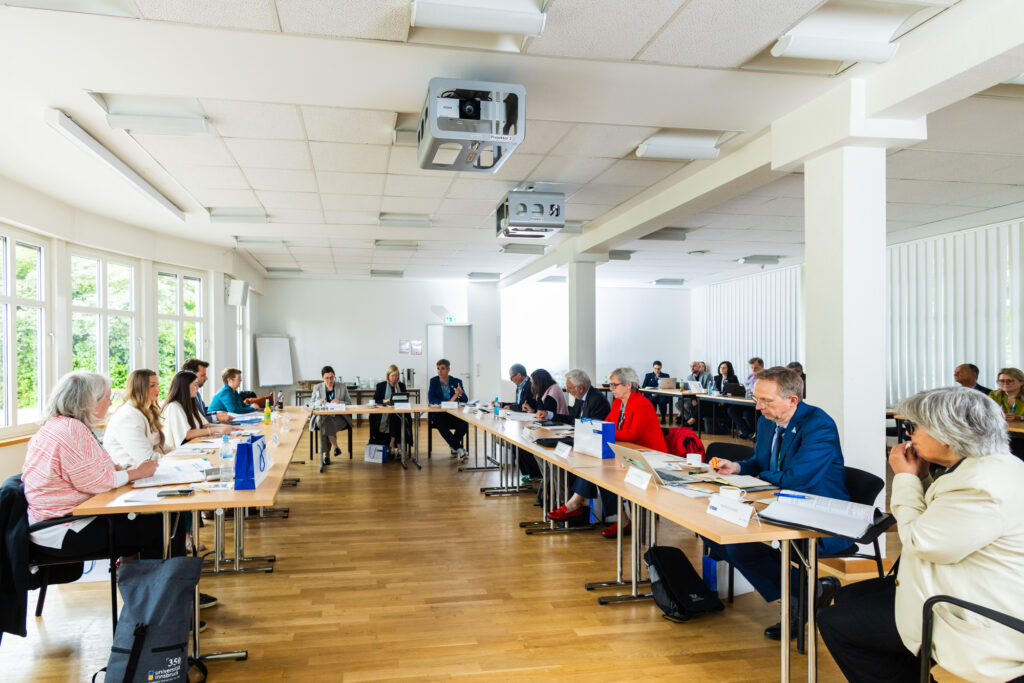
A delegation of 17 representatives from the URV took part in the strategic sessions at the University of Duisburg-Essen. Tarragona will host the next Aurora Annual Conference in May 2027
The Universitat Rovira i Virgili actively participated in the Aurora Annual Conference 2026, held from 18 to 21 May at the Universität Duisburg-Essen (Germany). The annual meeting brought together representatives from the alliance’s member universities to share results, define future priorities and continue the construction of a model for European university cooperation.
The URV delegation, comprising 17 representatives taken from the academic staff, research staff and students, took part in strategic meetings, working groups, workshops and discussion forums, which helped to consolidate the alliance’s common lines of work in areas such as mobility, teaching innovation, research, digital transformation and student participation.
The meeting also allowed the various working teams to make progress in preparing for the new phase of the Aurora project. During the conference, delegates began to outline proposals related to the extension of the project for the 2027-2029 period, and to analyse the recommendations put forward in the interim report presented to the European Commission in December 2025, with the aim of strengthening the impact and efficiency of joint actions.
It was also announced that the venue for the 2027 edition of the Aurora Annual Conference will be the Universitat Rovira i Virgili. The event will take place in May in Tarragona and will represent a new opportunity to demonstrate the URV’s commitment to the Aurora project and to reinforce its role as an active university in the construction of the European Higher Education Area.
.
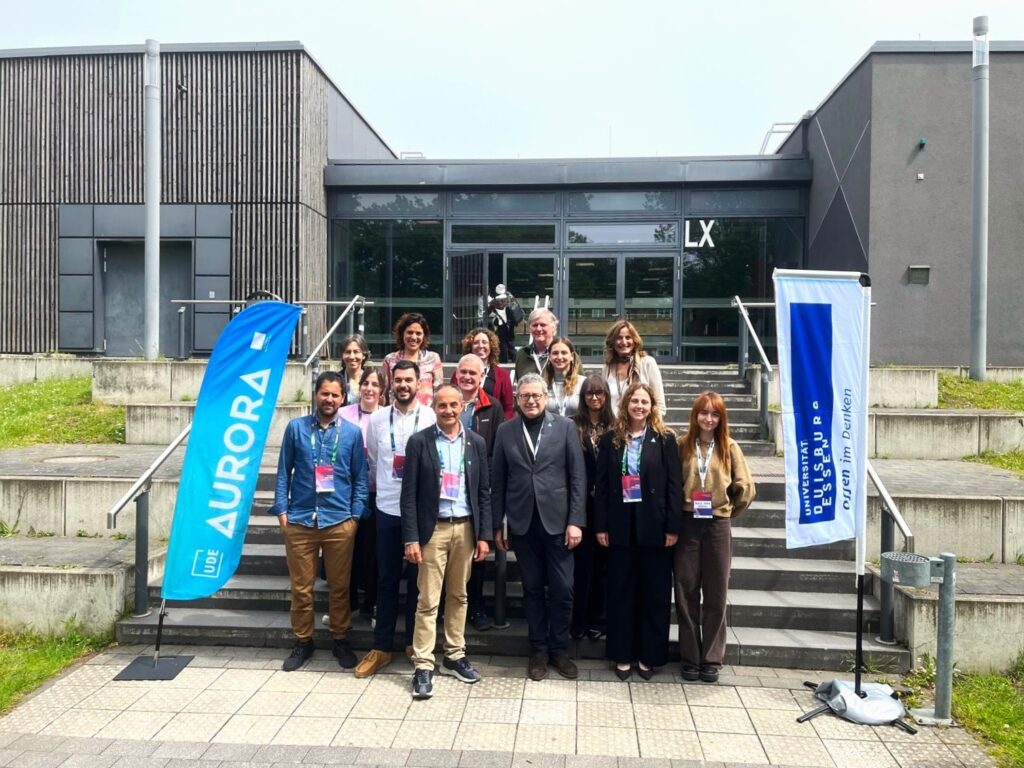
One of the highlights of the conference was the workshop “Aurora Blended Intensive Programmes – From Concept to Implementation”, led by Marina Vives, Internationalisation Projects Officer at the URV, and Nanna Teitsdóttir from the University of Iceland, respectively leader and co-leader of Aurora’s Exchange and Enabling Mobility working group. During the session, participants were able to share experiences and tools to drive Blended Intensive Programmes (BIPs) within the alliance.
Over the course of the conference, members of this working group also met to address specific issues of mobility, internationalisation at home, and the methodologies that contribute to its consolidation, such as COIL or BIP, as well as the internationalisation of institutional cultures.
Marina Vives, the working group leader, pointed out that, although they meet online monthly, working together in person always allows them to address more complex and broader issues, as discussions and agreements are more fluid. The closed-door meeting addressed topics such as the evaluation of the interim report, progress and planning for the second part of the project, and data handling issues, both in terms of collection and the tools used.
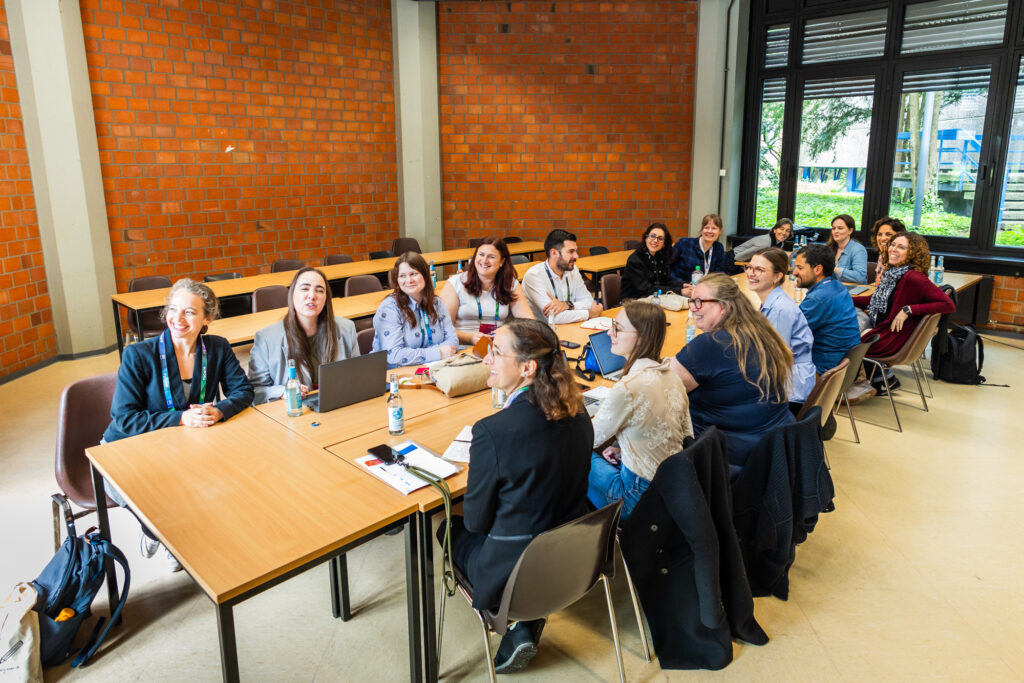
Likewise, taking advantage of the opportunity presented by Aurora’s large annual meeting, the Community for Good Practice in the Internationalisation of the Curriculum, which is also led by URV, found a slot in the programme when they could meet to discuss and review proposed actions and new proposals.
Meanwhile, the working teams made progress in preparing the new phase of the Aurora project for the period from 2027 to 2029. According to Jordi Serra, Aurora project leader at the URV, “the two-year extension should allow us to consolidate the work done so far and move towards initiatives with a greater impact, especially in the development of joint educational programmes at the European level.”
More specifically, “the new phase will require an even more integrated way of working between the different work packages and tasks of the teams, with a more agile structure, a reduced number of work packages and deliverables, and more concrete, results-oriented objectives. In this context, affirmed Jordi Serra, the URV will continue to contribute its expertise and play a leading role in strategic areas such as curriculum internationalisation and the issuance of digital credentials.”
In this latter area, the URV’s participation was also particularly relevant in the sessions dedicated to European digital credentials, one of the alliance’s strategic projects aimed at facilitating academic recognition and international mobility.
According to Jordi Cubells, URV Aurora Virtual Campus IT Engineer, participation in the workshop on digital credentials represents “a strategic step that aligns the Universitat Rovira i Virgili with a European framework that is already being rolled out in various universities and alliances”. He emphasised how these credentials “will enhance interoperability, improve academic recognition and provide students and staff with secure and verifiable credentials”. Cubells stressed that the URV has long been working in this direction and believes that this advance will “have a real impact on both international mobility and institutional efficiency”.
Student participation
The conference also had significant student participation. Representatives of the Aurora Student Council shared experiences on the integration of international students, jointly prepared the open session for students, and discussed the council’s internal workings.
The participation of URV students was given prominent recognition within the framework of the conference. Paula Mora, a Communications student at the URV, was part of the winning international team at the Seizmic Awards 2025, which recognise student-led projects with high potential for social and environmental impact.
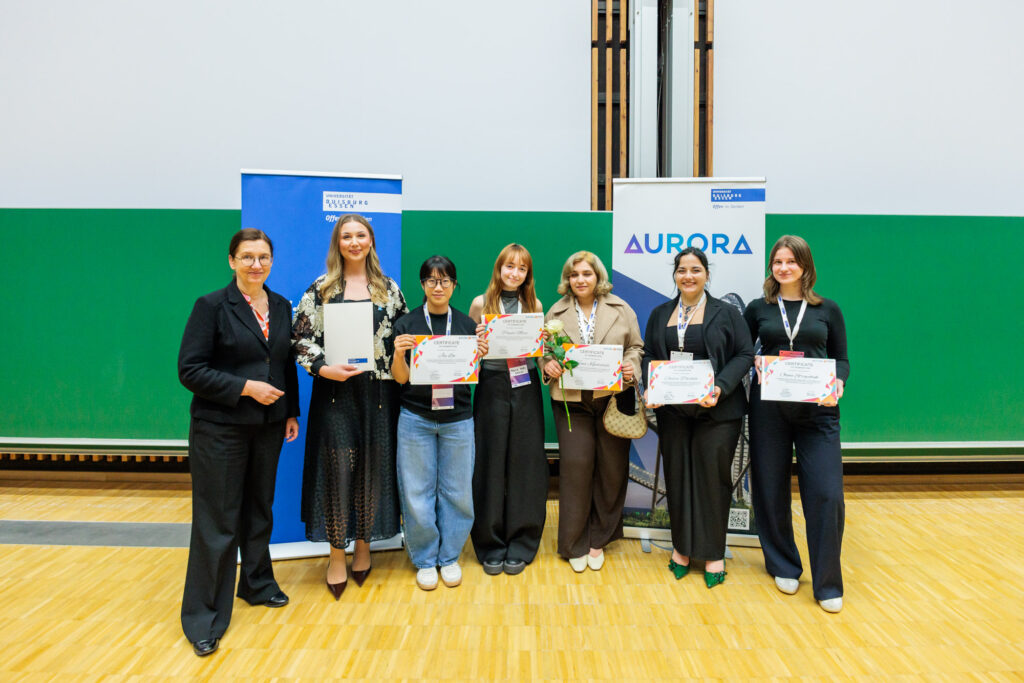
The award-winning project, SavEat, led by the University of Naples “Federico II” and jointly developed by students from various universities in the Aurora alliance, proposes a systemic model to recover the city of Naples’s food surpluses and transform them into educational opportunities, community meals and sustainable products. In particular, the jury praised the clarity of the project’s objectives, the feasibility of its proposal and its potential for measurable impact.
Alexandra Valsan, a URV student and member of the Aurora Student Council, emphasised that “in the Aurora Student Council, we have discussed the activities that each university has carried out this academic year in relation to the integration of international students. We have also helped to prepare the students’ Open Session and held internal debates about how the council functions. It has been a very enriching experience. I will always have fond memories of this trip with my colleague Júlia Bonet.”
