27/07/2026
The Erasmus Mundus Master’s Degree in Sustainable Catalysis is renewed and starts training the next generation of experts
The international programme has received €4.6 million to fund students to undertake placements at three European universities
The international programme has received €4.6 million to fund students to undertake placements at three European universities
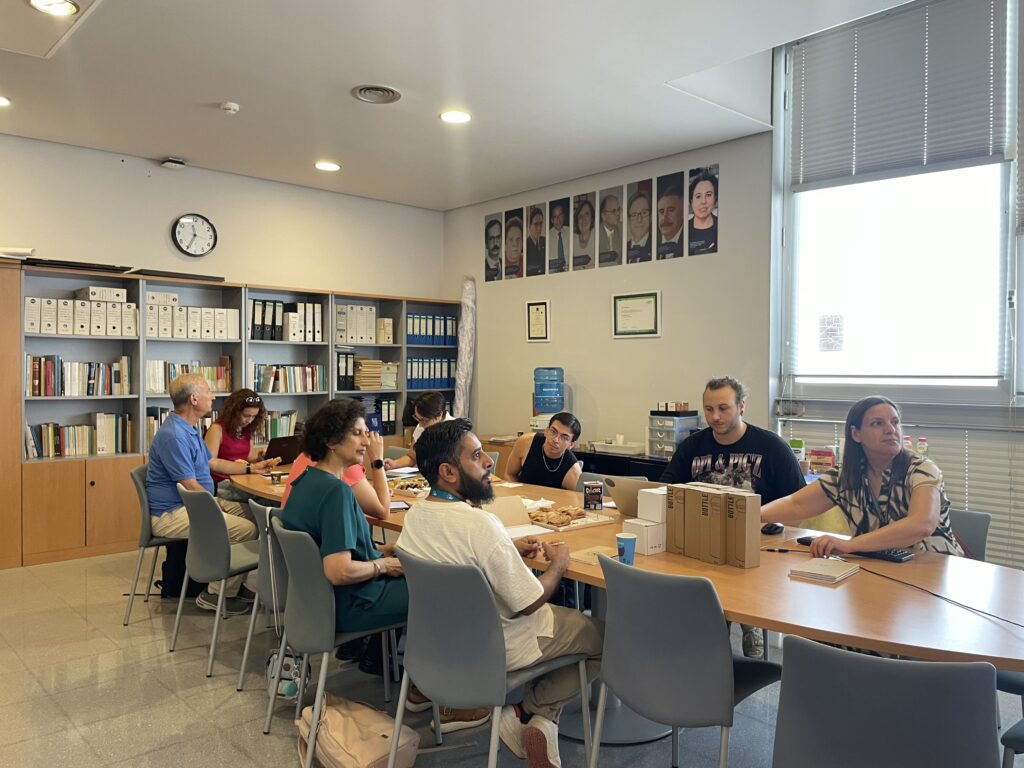
The Faculty of Chemistry at the Universitat Rovira i Virgili has hosted the closing meeting for the sixth edition of the Erasmus Mundus Master’s Degree in Sustainable Catalysis (SuCat) and, at the same time, has launched the new edition of the master’s degree, which will receive the Erasmus Mundus Joint Master’s Degree label of the European Union for another six years.
The master’s degree is internationally-oriented and offers 120 credits over two years, with placements at different European universities and the chance to specialise in biocatalysis, homogeneous catalysis or heterogeneous catalysis. The URV hosts the homogeneous catalysis specialisation and runs the master’s thesis subject for students who choose this path.
The event brought together students, alumni and teaching staff from the programme, who spent the day together reviewing the programme and highlighting its impact on their students’ careers. This is the case of Mohamed Shafik, a former student on the master’s degree and now a doctoral student at the Catalan Institute of Chemical Research (ICIQ). He recalls his experience on the SuCat as a period of great learning when he forged international connections: “I have learnt a lot and made many friends in Tarragona, France and Portugal,” he explains. For this reason, he recommends the programme to those interested in catalysis.
In fact, with its renewal, the programme is expanding its international reach and maintains a community of students from different continents. “It is a very international master’s degree, with students from all continents,” notes the master’s coordinator, Maria Besora Bonet, who adds that this diversity fosters the creation of personal and professional relationships among the students.
Thus, in this new edition, the consortium will be joined by the Università degli Studi di Padova, alongside the University of Poitiers, the University of Aveiro and the URV. Besora highlights that the inclusion of the Italian university reinforces the programme’s multidisciplinary nature and enables it to provide even more comprehensive training in the field of sustainable catalysis. “The master’s programme encompasses the three main branches of catalysis: homogeneous catalysis, which we work on specifically at URV; heterogeneous catalysis, which is studied primarily at the University of Poitiers; and enzymatic catalysis, which is offered at the University of Aveiro,” he explains.
With the renewal of the programme, the consortium is beginning a new six-year phase in which it aims to continue to train experts in catalysis and sustainable chemistry in order to address the challenges of the transition towards more sustainable models.
